
Chinese coriaria
Coriaria sinica
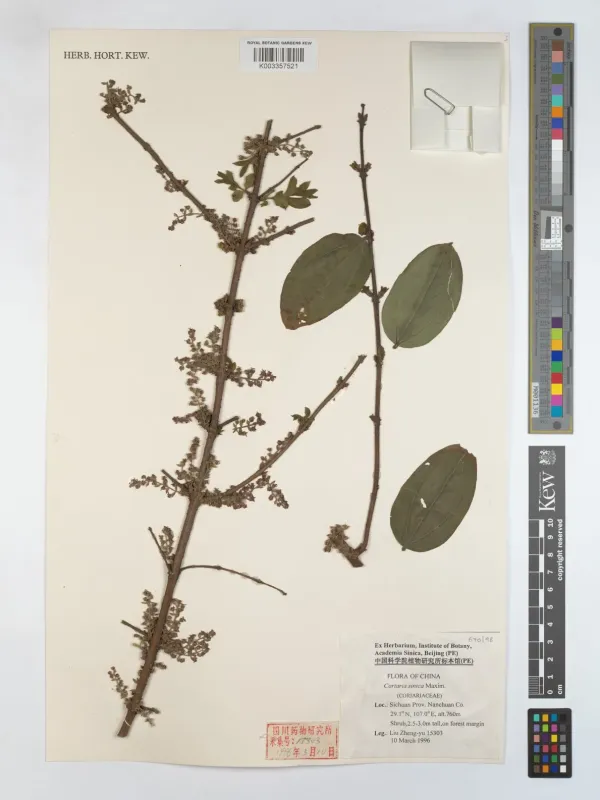
Description
Growing requirements
Chinese coriaria (Coriaria sinica) is a deciduous perennial shrub belonging to the Coriariaceae family. Native to the mountainous regions of China, this plant is well-suited for temperate climates that feature consistent ambient moisture levels.
The plant thrives in loose, well-drained soils that are rich in organic matter. A neutral or slightly acidic soil pH is considered ideal for maintaining healthy nutrient uptake and supporting the overall vigor of the root system.
Regarding light conditions, Coriaria sinica prefers locations with dappled shade or partial sun exposure. High-intensity direct sunlight can be harmful to the foliage, often causing scorching during peak summer months, which diminishes the ornamental value of the shrub.
Agricultural management requires careful attention to irrigation schedules, ensuring that the soil remains moist but never waterlogged. Poor drainage is a significant risk factor that can lead to root rot and eventual plant failure in heavier soil types.
Historically and economically, this plant is utilized primarily for its decorative properties in horticulture. Its unique structure and berry-like fruit displays make it a prized specimen for garden collectors and landscape designers looking for distinct, non-traditional flora.
Main diseases and pests
Common health issues for this species include fungal infections such as powdery mildew, which often develop when air circulation is poor or humidity levels remain static for extended periods.
Pests such as aphids and spider mites may pose a threat to the succulent new growth during the spring season. Integrated pest management strategies, including the use of horticultural oils, are effective in controlling these outbreaks.
Gardeners must be aware that all parts of the Chinese coriaria contain toxic compounds known as coriamyrtin. Due to this toxicity, it is essential to keep the plant away from areas accessible to pets and young children.
Effective maintenance includes regular sanitation pruning to remove dead or diseased wood. This practice not only improves the structural aesthetics of the plant but also significantly reduces the likelihood of fungal colonization.
Balanced fertilization is key to a robust immune system; over-application of nitrogen-based fertilizers should be avoided to prevent weak, etiolated growth that is highly susceptible to mechanical damage and pest infestation.