
Tree Coriaria
Coriaria arborea
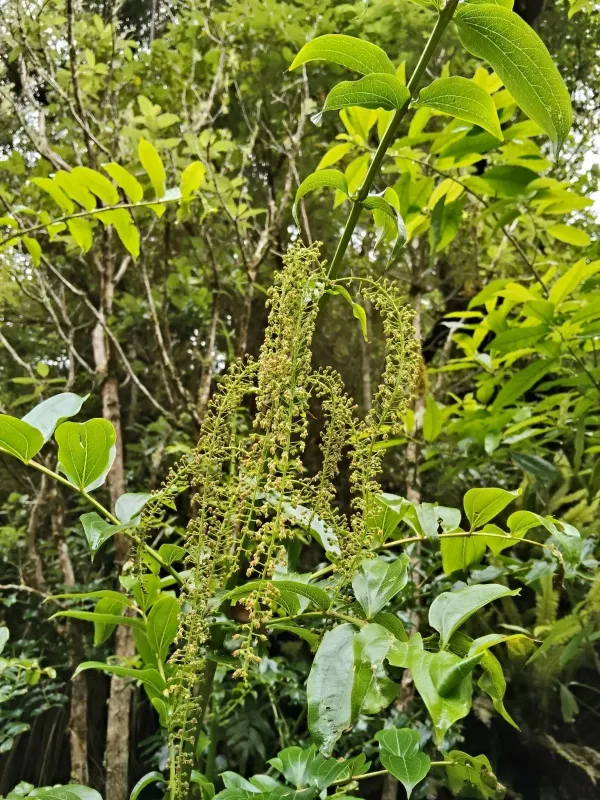
Description
Growing requirements
Tree Coriaria (Coriaria arborea) is a notable shrub or small tree belonging to the Coriariaceae family. Native to New Zealand, this species is well-adapted to diverse environments, frequently serving as a pioneer species in natural ecological succession.
The plant is distinguished by its distinct opposite leaves and four-angled branches. Botanically, it is a significant species due to its ability to form symbiotic relationships with nitrogen-fixing bacteria of the genus Frankia, allowing it to thrive in nutrient-poor environments.
Agronomically, Tree Coriaria is valued for its soil-improving properties. It plays a crucial role in ecological restoration by accumulating nitrogen in the soil, which facilitates the growth of subsequent species in the plantation area.
Cultivation requirements include well-drained soil and adequate sun exposure. The species is sensitive to waterlogged conditions, making soil aeration and drainage critical for plant survival and long-term health during the growing cycle.
Climatically, it prefers temperate regions with consistent precipitation levels. While adaptable to various soils, it shows the best growth performance in light, crumbly substrates where its root system can develop without excessive resistance.
Main diseases and pests
Common threats to Tree Coriaria include fungal foliar diseases, which are typically exacerbated by high humidity and poor air circulation within the shrub's canopy. Regular pruning is recommended to improve overall plant hygiene.
Insect pests, specifically aphids, represent a major concern during the peak growth seasons. These pests feed on the tender young shoots, causing growth inhibition and potentially exposing the plant to secondary viral infections.
Root rot caused by stagnant water is a serious physiological threat. If the soil drainage is inadequate, the symbiotic bacteria can be damaged, leading to a rapid decline in the tree's health and productivity.
Weed competition can significantly hinder the establishment of young Coriaria plants. Implementing a strategic mulch layer around the base helps retain moisture while suppressing competitive herbaceous plants during the early years.
Integrated Pest Management (IPM) practices are highly encouraged. Minimizing the use of harsh chemical pesticides helps maintain the health of the plant's nitrogen-fixing root nodules, which are essential for its resilience.