
Coprosma tenuicaulis
Coprosma tenuicaulis
Description
Growing requirements
Coprosma tenuicaulis, known as a member of the Rubiaceae family, is a distinct evergreen shrub native to New Zealand. It is naturally adapted to wetland environments, swamps, and floodplains, where it thrives in moist soil conditions.
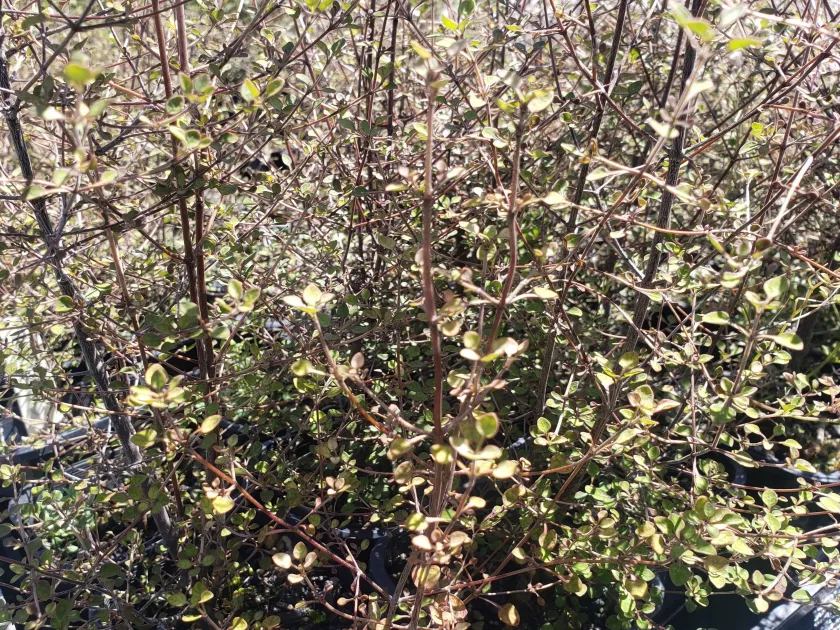
Botanically, this species is defined by its thin, wiry, and interlacing stems, which create a dense and textured shrub habit. The leaves are small, glossy, and dark green, a classic trait of the Coprosma genus, often referred to as mirror bushes due to their reflective surface.
The plant requires consistently moist, fertile, and well-drained soil. It does not tolerate drought well, making irrigation a critical aspect of its cultivation. While it can adapt to various light conditions, it performs best in sheltered spots away from harsh, direct sunlight.
In terms of climate, Coprosma tenuicaulis prefers temperate conditions. It is not frost-tolerant and requires protection during colder periods. In non-temperate zones, it is typically cultivated as a container plant to allow for winter shelter indoors.
The primary utility of the plant is decorative. It is highly valued in garden design for its unique, tangled growth pattern, making it an excellent choice for hedge formation, native-style landscapes, or as a textured backdrop in damp garden areas.
Main diseases and pests
Common threats for Coprosma tenuicaulis include root rot, which is often caused by waterlogged soil. Proper drainage is essential to ensure the longevity of the plant, as stagnant water is detrimental to its vascular system.
Pests such as scale insects and mealybugs can infest the foliage, particularly when the plant is kept in poor indoor air circulation. Spider mites may also occur in dry environments, requiring careful humidity management.
Fungal leaf spots are another concern, usually triggered by high humidity within the dense canopy and poor airflow. Regular pruning to thin out the branches helps significantly in preventing fungal outbreaks and promoting overall plant health.
Weed management and soil competition can also hinder growth, especially during the early establishment phase. Keeping the base of the shrub clear of encroaching weeds ensures better nutrient uptake and air access for the root zone.
Integrated pest management, including regular visual monitoring and the use of horticultural oils, is recommended to control populations of insects without causing chemical stress to the evergreen foliage.