
Coprosma rhamnoides
Coprosma rhamnoides
Description
Growing requirements
Coprosma rhamnoides is a dense, evergreen shrub belonging to the Rubiaceae family. Native to New Zealand, this plant is well-adapted to various environments, ranging from coastal thickets to mountain shrublands, where it plays a role in the local ecosystem.
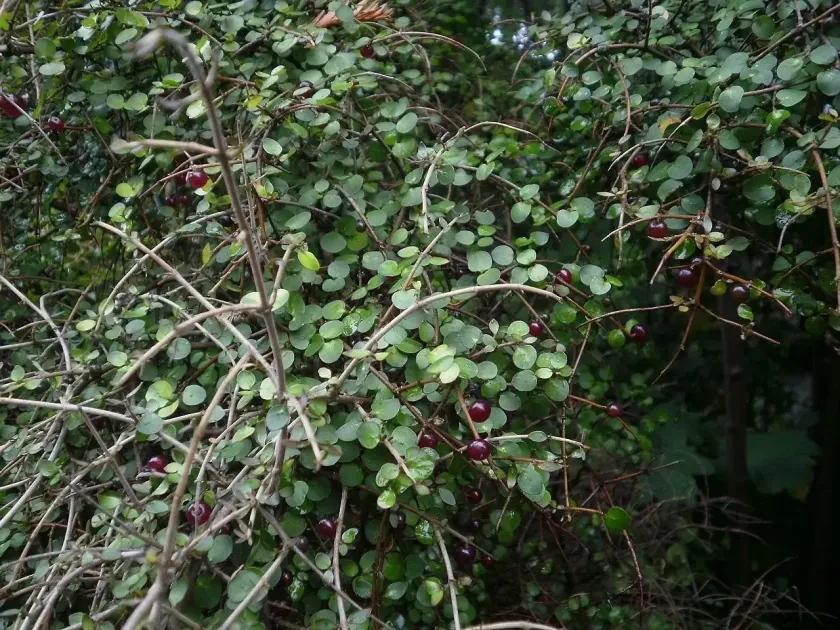
The plant is distinguished by its intricate, tangled branching pattern and small, dark green leaves. Its botanical uniqueness is further enhanced by its drupaceous fruits, which transition from pale colors to deep red or black, providing significant visual interest throughout the late season.
Regarding cultivation requirements, Coprosma rhamnoides thrives in well-drained soils ranging from sandy to loamy textures. It performs best in positions with full sun to partial shade; however, shelter from harsh, cold winds is critical to prevent foliage burn and maintain the integrity of its structure.
The agronomy of this species focuses on maintaining balanced soil moisture. While it is somewhat tolerant of dry spells once established, consistent watering during the initial growth phase is necessary for healthy development. Fertilization should be mild, using balanced organic compost in early spring.
In terms of economic and practical use, the plant is highly valued for hedging and topiary work due to its compact habit and ability to withstand trimming. It is frequently featured in Mediterranean-style gardens, rockeries, and native New Zealand plant collections for its architectural value.
Main diseases and pests
The primary threats to this shrub include root rot diseases typically caused by stagnant water or compacted soil conditions. Ensuring excellent site drainage is the most effective preventative measure against soil-borne pathogens that compromise the root system.
Insects such as mealybugs and scale insects may occasionally infest the dense branches. Integrated pest management, including regular monitoring and the use of horticultural oils, is recommended to control these pests before they spread across the dense structure of the shrub.