
Coprosma petriei
Coprosma petriei
Description
Growing requirements
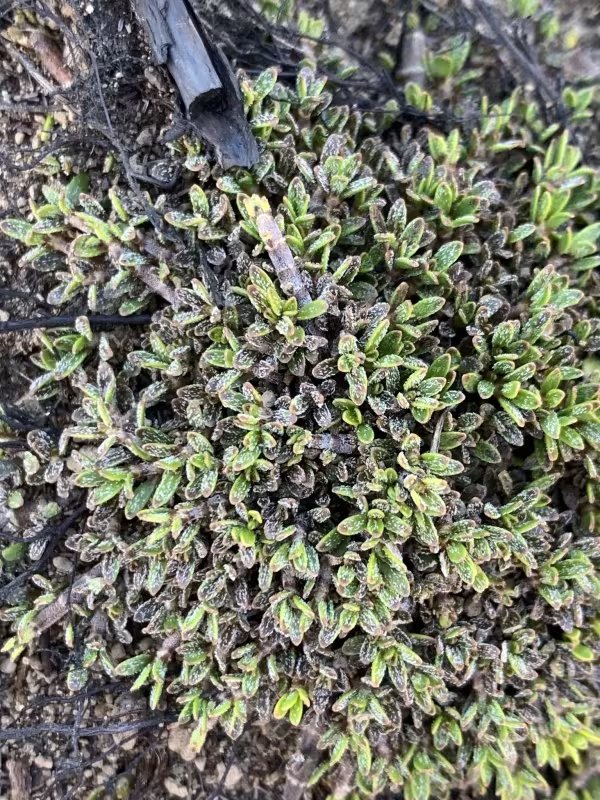
Coprosma petriei is a distinct, mat-forming shrub belonging to the Rubiaceae family. Originating from the mountainous regions of New Zealand, this plant is well-adapted to alpine climates where it thrives in harsh, exposed conditions.
The plant requires well-drained, porous soils to flourish. In agricultural and horticultural settings, adding grit or coarse sand to the planting medium is highly recommended to prevent waterlogging and facilitate healthy root development.
Full sun is ideal for Coprosma petriei, though it exhibits good tolerance for partial shade. When exposed to sufficient sunlight, the foliage develops a richer color, which is a key trait for its success in ornamental garden design.
Climate adaptability is one of the plant's main strengths. It is capable of enduring cold winters, making it a reliable choice for gardeners in temperate regions. It prefers environments where air circulation is consistent to avoid fungal issues.
Minimal fertilization is required for this species. Over-fertilization, especially with high nitrogen content, can lead to overly rapid, soft growth that is more susceptible to environmental stressors and mechanical damage.
Harvesting
The primary use for Coprosma petriei is as a ground-stabilizing and ornamental plant. Its low-growing, dense habit makes it an excellent choice for rock gardens, container displays, and erosion control on embankments.
Propagation is most effectively achieved via stem cuttings. Cuttings should be taken during the early growing season and placed in a moist, sandy propagation medium to encourage rapid rooting and establishment.
Seed collection is possible after the berries mature. It is essential to remove the pulp from the seeds immediately after harvest to maintain viability and prevent the onset of pathogens during the storage process.
Maintenance involves very little pruning, as the plant maintains a naturally compact and neat growth form. Light trimming can be performed in the spring if the plant grows beyond its designated area in the landscape.
The species is generally resistant to most common garden pests. However, monitoring for sap-sucking insects in protected or poorly ventilated environments is recommended to ensure the plant maintains its aesthetic quality throughout the year.