
Coprosma lucida
Coprosma lucida
Description
Growing requirements
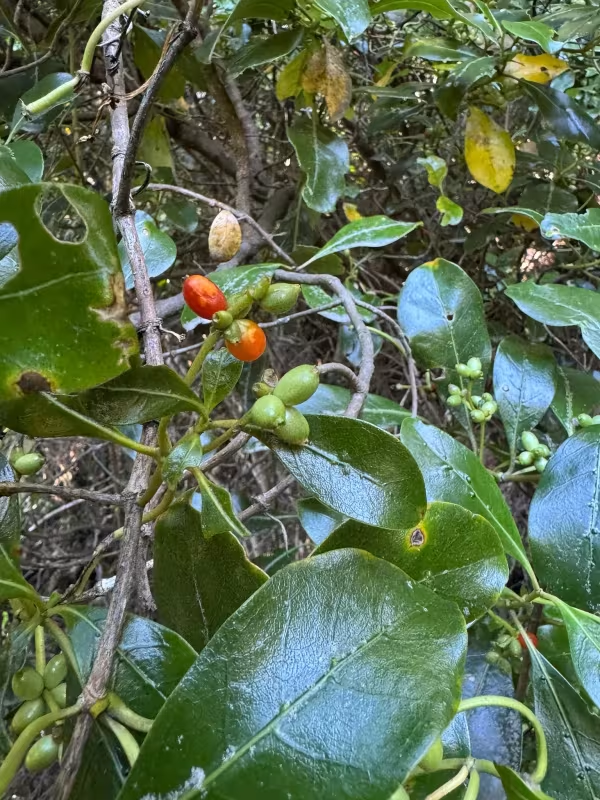
Coprosma lucida, commonly known as the shining karamu, is an evergreen shrub belonging to the Rubiaceae family. It is native to New Zealand, where it thrives in a variety of environments, ranging from coastal scrub to temperate forests.
The plant is noted for its distinctive glossy, leathery leaves that catch the light, making it a popular choice for ornamental landscaping. During the fruiting season, it produces bright orange-red drupes which add seasonal color to the foliage.
For optimal growth, this species requires a well-draining, nutrient-rich soil. It thrives in locations that receive full sun to partial shade, though it prefers protection from harsh, drying winds in more exposed coastal settings.
Watering requirements are moderate, but the soil should remain consistently moist during the active growing season. However, it is crucial to avoid waterlogging, as the root system of Coprosma lucida is prone to decay if kept in anaerobic conditions.
The plant is suitable for hedging and screening, responding well to frequent pruning. This maintenance practice encourages denser growth and prevents the shrub from becoming leggy over time, ensuring a tidy and healthy appearance.
Main diseases and pests
Common health issues in Coprosma species are primarily related to fungal pathogens, such as leaf spot and root rot, which typically occur due to poor drainage or overly humid conditions in the plant's microclimate.
Pest threats include various sap-sucking insects like scale insects, mealybugs, and aphids. These pests can severely weaken the plant by feeding on the tender growth and potentially transmitting viral agents.
Integrated pest management, involving both physical removal of infested foliage and the application of horticultural oils or systemic insecticides, is recommended for effective control of infestations.
Nutritional deficiencies, specifically nitrogen or iron, can manifest as interveinal chlorosis. Applying a balanced, slow-release fertilizer during the early spring helps maintain the deep green pigment characteristic of the species.
Monitoring the plant for signs of environmental stress is vital. If foliage begins to wilt or lose its signature gloss, it is usually a clear indicator of either moisture stress or incorrect soil pH levels, requiring immediate adjustment of cultivation practices.