
Coprosma hybrids
Coprosma hybrids
Description
Growing requirements
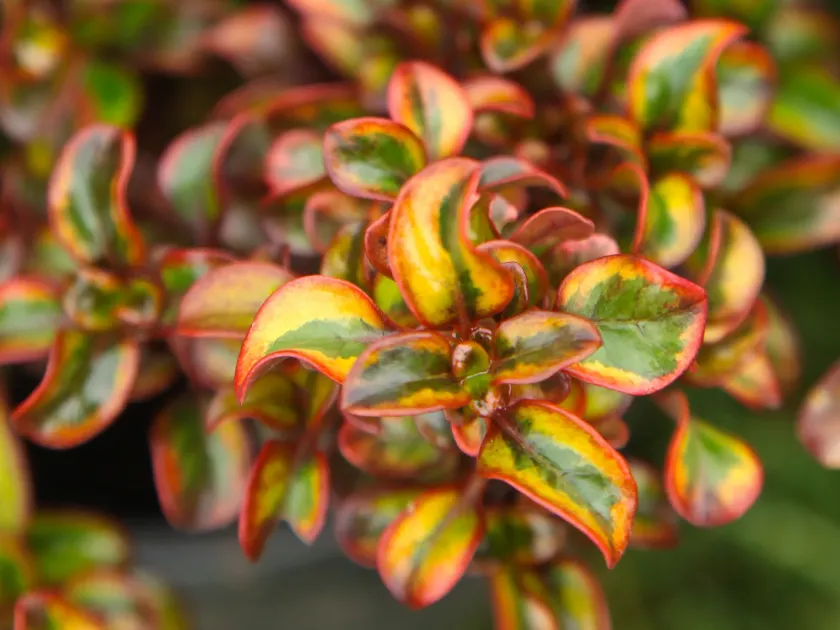
Coprosma hybrids are ornamental evergreen shrubs belonging to the Rubiaceae family. Originating from New Zealand, these plants are widely recognized for their glossy, wax-like foliage that often features vibrant colors ranging from deep red to bright yellow.
These plants thrive in mild temperate climates. They are well-suited for coastal gardens, as they possess a high tolerance to salt spray and wind. However, they are sensitive to hard frosts and require protection or container cultivation in colder regions.
For successful cultivation, well-draining soil with a neutral to slightly acidic pH is essential. They prefer sunny to partially shaded spots, where the light intensity helps maintain the intense pigment of the variegated or dark-leaved hybrids.
Agricultural management includes regular pruning, which promotes denser growth and allows for the creation of formal hedges or topiary figures. Watering should be moderate; it is crucial to allow the soil to dry slightly between irrigation cycles.
The horticultural use is primarily decorative. Due to their compact growth habit and aesthetic appeal, they are frequently used in borders, containers, and rock gardens to provide year-round color and texture.
Main diseases and pests
Common pests include mealybugs and scale insects, which are particularly problematic in greenhouse environments or indoor settings. These pests typically cluster on the undersides of leaves and in leaf axils, requiring systematic treatment with horticultural oils or insecticides.
Fungal issues, such as root rot and leaf spot, are typical results of overwatering or poor air circulation. To minimize risks, growers should maintain adequate spacing between plants and ensure that the growing medium does not remain waterlogged.