
Pyrenean Earthnut
Conopodium pyrenaeum
Description
Growing requirements
The Pyrenean Earthnut (Conopodium pyrenaeum) is a perennial herbaceous plant belonging to the Apiaceae family. It is native to the mountainous areas of Southwestern Europe, where it thrives in meadows and woodland edges.
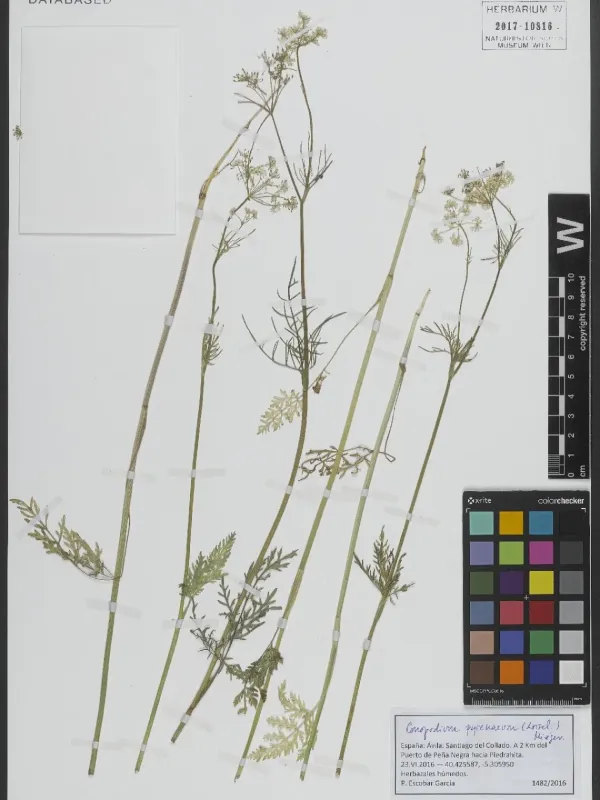
Botanically, the plant is distinguished by its tuberous root, which is a round, edible structure often compared to a chestnut in flavor and texture. The above-ground foliage consists of finely divided leaves and delicate white umbels typical of the family.
Regarding cultivation, the plant requires well-drained, humus-rich soil. It is particularly sensitive to waterlogging, as excessive moisture often leads to tuber decay during the dormant winter period.
Climate requirements for this species are centered on temperate conditions. It favors cool summers and requires a period of dormancy in winter to properly trigger the growth cycle for the following spring.
In terms of agricultural use, the tubers are the primary harvestable product. They possess significant nutritional value and can be roasted or boiled, offering a niche opportunity for specialized vegetable production or small-scale garden plots.
Main diseases and pests
Soil-dwelling pests such as wireworms represent the most significant threat to the Pyrenean Earthnut. These insects feed on the tubers, leaving them unmarketable and vulnerable to secondary rot infections.
Fungal pathogens, particularly those causing root and tuber rot, are prevalent in poorly drained soils. Maintaining proper aeration and moisture management is essential to prevent these diseases from spreading.
Aphids can occasionally colonize the young growth during spring, causing leaf curling and stunted development. If infestations reach significant levels, local organic treatments may be required.
Crop rotation is a fundamental practice to manage soil health. Moving the cultivation area every few years helps to break the life cycles of specific soil-borne pathogens and pests.
Careful harvesting is required to minimize damage to the tubers, as physical bruises significantly increase the risk of decay during storage or before the next growing season.