
Labdanum rockrose
Cistus ladanifer L.
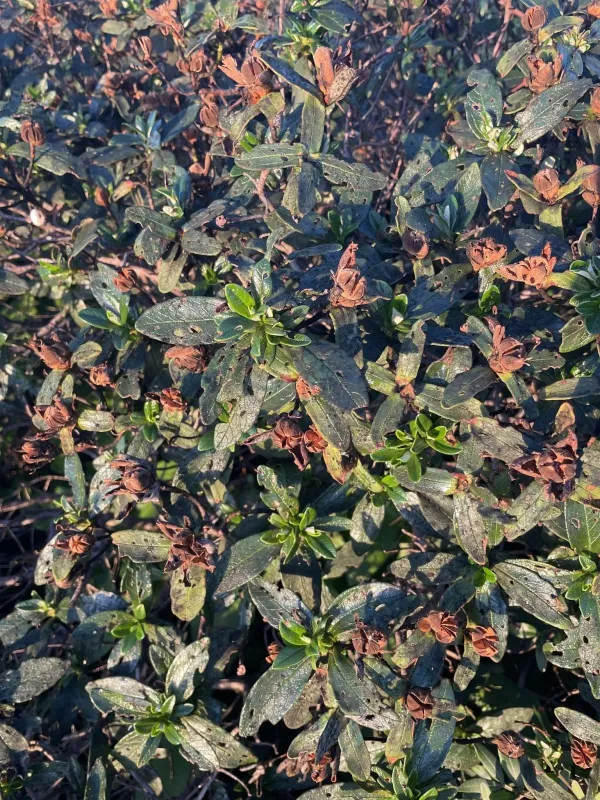
Description
Growing requirements
Labdanum rockrose (Cistus ladanifer L.) is a perennial evergreen shrub belonging to the Cistaceae family. Native to the Mediterranean region, particularly the Iberian Peninsula, this plant is well-known for its ability to thrive in poor, rocky, and acidic soils under intense sunlight.
The plant is highly adapted to arid environments, possessing a sophisticated mechanism to prevent water loss. Its leaves secrete a thick, aromatic resin known as labdanum, which protects the plant from dehydration during scorching summer temperatures and provides it with a distinct scent.
Botanically, the plant is characterized by its lanceolate leaves and large, white, five-petaled flowers with distinctive dark purple spots at the base. It is a hardy species that does not require intensive fertilization, making it a sustainable choice for marginal Mediterranean landscapes.
The primary economic use of the rockrose is the production of labdanum, an oleoresin harvested from the foliage. This natural substance is an essential ingredient in the perfume industry, valued for its complex, amber-like, and musk-like notes, as well as its unique fixative properties.
Beyond the fragrance industry, the plant has a long history of medicinal use. Its extracts contain phenolic compounds that exhibit significant antibacterial and anti-inflammatory properties, making them useful in both traditional remedies and modern skincare product development.
Main diseases and pests
The main threat to Cistus ladanifer cultivation is waterlogged soil, which leads to root rot and fungal infections. Ensuring proper field drainage is the most critical management task for agronomists working with this crop.
Thanks to the high concentration of secondary metabolites in its resin, the plant is naturally resistant to most common agricultural pests. While infrequent, occasional monitoring for aphids is recommended to maintain the quality of the harvested biomass.