
Poplar-leaved Cistus
Cistus populifolius L.
Description
Growing requirements
The Poplar-leaved Cistus (Cistus populifolius L.) belongs to the Cistaceae family. This evergreen shrub is native to the western Mediterranean, primarily found in the Iberian Peninsula regions.
The species thrives in well-drained, nutrient-poor, rocky, or sandy soils. It is highly intolerant of waterlogged conditions, which can lead to rapid decay of the root system and plant death.
Full sun exposure is mandatory for healthy growth. The plant requires a location protected from harsh, freezing winds, as it is relatively sensitive to severe frost during its early stages of development.
Agrotechnical maintenance relies on minimal intervention. Due to its Mediterranean origins, the shrub is exceptionally drought-tolerant and requires irrigation only during prolonged periods of extreme heat.
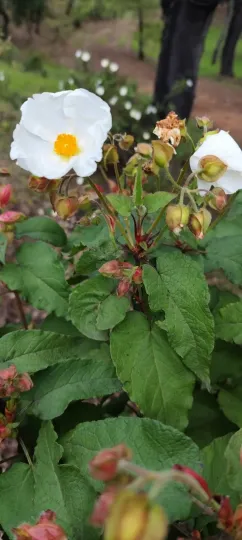
The plant features distinct cordate leaves and white flowers with yellow centers. It is widely cultivated for ornamental purposes and for its aromatic resins, which have been historically used in the essential oil industry.
Main diseases and pests
The most significant threat to this crop is fungal infection, specifically Phytophthora or other rot-related pathogens, primarily caused by excessive soil moisture and insufficient soil aeration.
Pest pressure is relatively low due to the plant's natural resinous secretion. However, aphids can occasionally infest new terminal growth, necessitating monitoring during the active spring growing season.