
Florentine Rockrose
Cistus florentinus Lam.
Description
Growing requirements
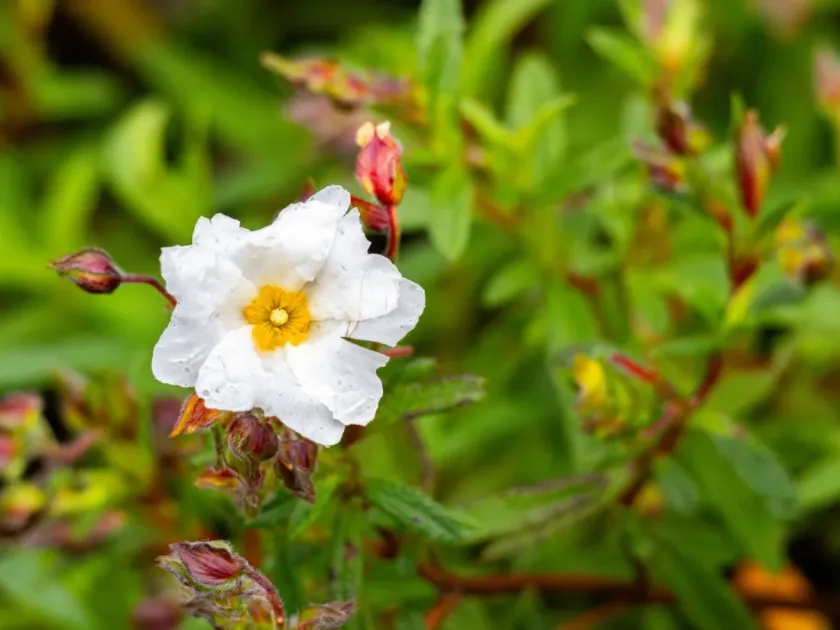
Florentine Rockrose (Cistus × florentinus) is an evergreen, hybrid shrub belonging to the Cistaceae family. It is a highly valued ornamental plant characterized by its compact, rounded habit, aromatic foliage, and profuse white flowers with yellow centers that bloom in late spring.
To thrive, the plant requires a location with full, direct sunlight throughout the day. It is naturally adapted to Mediterranean-like conditions and performs exceptionally well in dry, sunny borders where other garden plants might suffer from the heat and lack of moisture.
Soil requirements for Cistus florentinus are quite specific: it demands excellent drainage. The plant excels in sandy, gravelly, or stony soils with a slightly acidic to neutral pH. Heavy clay soils must be amended with drainage material to prevent waterlogging, which the plant cannot tolerate.
Agrotechnical maintenance is minimal once the plant is established. Annual pruning immediately after flowering helps to maintain its shape and encourages vigorous growth for the next season. It is advisable to cut back only the current year's green growth, as the plant does not regenerate well from old wood.
Given its limited frost hardiness, this species is typically grown in sheltered positions or in pots in colder regions. Its ability to thrive in poor soils makes it an ideal choice for rock gardens and xeriscaping projects where minimal water input is a key design criterion.
Main diseases and pests
The primary threat to the health of Florentine Rockrose is root rot caused by Phytophthora species. This condition is almost exclusively the result of poorly drained soil or excessive irrigation, which suffocates the root system and leads to rapid wilting and plant death.
Powdery mildew can occasionally affect the foliage, particularly in humid or stagnant air environments. Adequate spacing between plants and ensuring good air circulation are the most effective preventive measures to minimize the risk of fungal infections in the shrubbery.
While generally resistant to most pests due to the resinous oil produced by its leaves, the plant may occasionally attract aphids during periods of rapid new growth. If infestations occur, they can usually be managed with gentle, organic insecticidal soaps.
Spider mites are another potential pest in exceptionally dry and warm climates. Monitoring the underside of leaves and providing a stable environment can prevent these mites from causing significant damage to the plant's aesthetic value.
Overall, maintaining the plant's vigor through proper location and avoidance of over-fertilization is the best defense against pests and diseases. Rockrose prefers a low-nutrient environment and does not require frequent or heavy fertilization to remain healthy and vibrant.