
Cistus x argenteus
Cistus x argenteus Dansereau
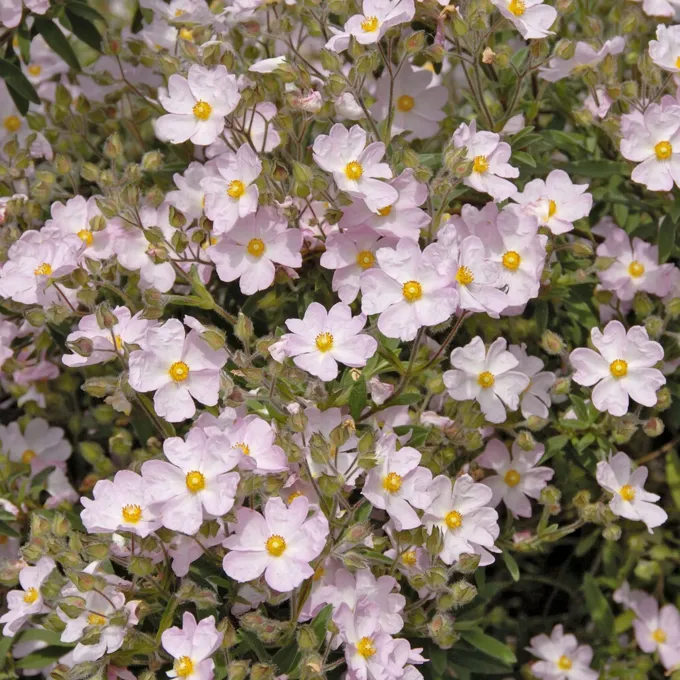
Description
Growing requirements
Cistus x argenteus is a decorative shrub belonging to the Cistaceae family. It is a hybrid species known for its attractive silver-hued foliage and delicate flowers that typically appear in late spring and early summer, adding significant aesthetic value to gardens.
The plant originates from Mediterranean climates, where it has evolved to thrive in dry, rocky soils. It is naturally adapted to high light intensity and requires full sun exposure to maintain its compact shape and prevent it from becoming overly leggy.
The primary requirement for successful cultivation is excellent drainage. The soil should be gritty or sandy; it is essential to avoid sites where moisture accumulates, as the root system of the Cistus is highly susceptible to saturation-induced rot.
In terms of climatic adaptability, this plant is best suited for zones with mild winters. In areas prone to hard frosts, it is recommended to grow the plant in containers so it can be moved to a sheltered environment during the coldest months of the year.
Agricultural practices for this culture are simple: it requires very little fertilization. Supplemental feeding often does more harm than good by promoting weak, rapid growth that is less resistant to weather fluctuations. Minimal pruning after flowering helps maintain the desired form.
Main diseases and pests
Root rot is the most serious threat to Cistus x argenteus. It is almost exclusively caused by overwatering or poor soil drainage, which inhibits oxygen flow to the roots and creates conditions favorable for fungal pathogens.
Powdery mildew is a common foliage issue, especially in environments with high humidity or lack of airflow. Ensuring adequate spacing between individual plants is a key cultural practice to mitigate the spread of this fungal disease.
Pest pressure from aphids and spider mites can occur, particularly in protected or warm, dry microclimates. These pests feed on the sap, causing leaf curling and general chlorosis if the infestation is left uncontrolled.
Integrated pest management should be used to protect the plant. Using horticultural oils or insecticidal soaps is often sufficient to control early infestations without causing damage to the delicate silver foliage.
Prevention is the best strategy for maintaining healthy plants. By providing proper airflow, keeping the root zone dry, and avoiding excessive nitrogen, growers can ensure that Cistus x argenteus remains resilient against most typical horticultural threats.