
Texas hogplum
Colubrina texensis
Description
Growing requirements
Texas hogplum (Colubrina texensis) is a perennial deciduous shrub belonging to the Buckthorn family (Rhamnaceae). The plant is native to the southwestern United States and northern Mexico, where it has evolved to thrive in arid and semi-arid environmental conditions.
In its natural habitat, the species is found on rocky slopes, limestone outcrops, and dry hillsides. Its exceptional drought tolerance makes it a highly valuable specimen for xeriscaping and sustainable landscaping in regions with poor soil quality and limited water resources.
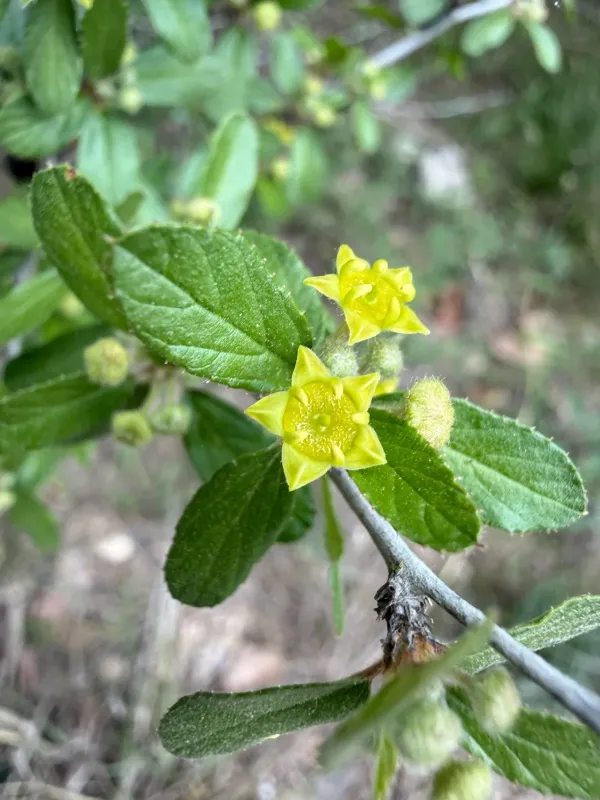
Botanically, the plant is a multi-branched shrub reaching heights of 1 to 2 meters. Its leaves are typically oval or oblong with a somewhat glossy texture, an adaptation designed to minimize water loss through transpiration during extreme summer heat.
Successful cultivation requires well-draining soil, ideally with a neutral or alkaline pH level. While the shrub is exceptionally resilient to low rainfall, it responds favorably to consistent, moderate irrigation during the establishment phase and active growth periods in nursery settings.
The primary economic use of Texas hogplum is ornamental, as it is used for hedges, privacy screens, and slope stabilization. Furthermore, the plant is highly regarded by beekeepers, as it serves as a reliable nectar source for pollinators during the dry seasons.
Main diseases and pests
The plant demonstrates a high level of natural resistance to most common plant diseases. However, in environments with poor drainage or excessive soil moisture, the root system is susceptible to fungal rots, necessitating proper site preparation to avoid water accumulation.
The primary pests affecting Colubrina texensis are spider mites, which thrive in hot and dry climates. Additionally, occasional infestations of aphids or scale insects may occur, requiring timely inspection and the application of appropriate pest management strategies.