
Nakedwood
Colubrina ferruginosa
Description
Growing requirements
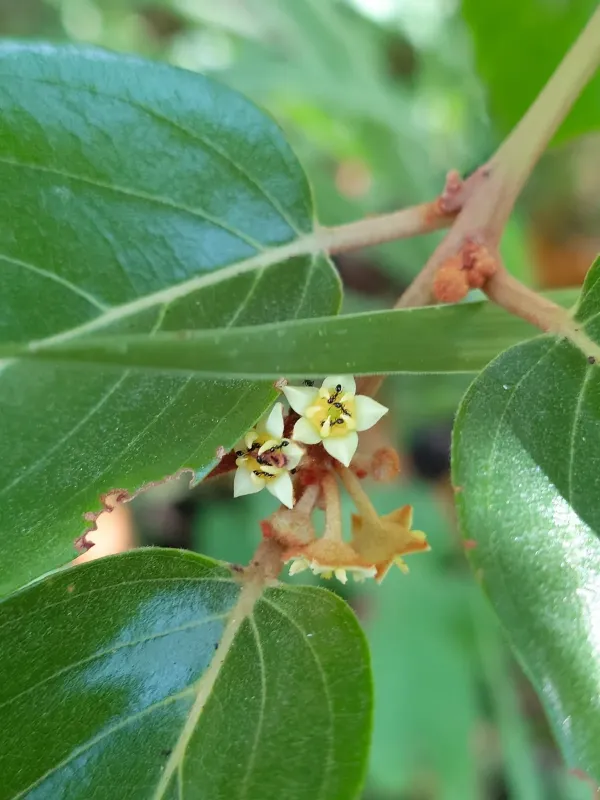
Colubrina ferruginosa, commonly known as Nakedwood, is a small-to-medium-sized evergreen tree within the Rhamnaceae family. Its name reflects the rusty, pubescent appearance of its young branches, which is a distinctive botanical feature of the species in its natural habitat.
The plant is native to the Caribbean basin, including Southern Florida, the Bahamas, and various Caribbean islands. It thrives in dry, rocky, and limestone-based soils, demonstrating significant resilience to the challenging environmental conditions typical of its natural range.
Regarding site requirements, Nakedwood demands high solar exposure and excellent drainage. It is highly drought-tolerant, making it an ideal candidate for cultivation in areas with seasonal water scarcity where more sensitive crops might fail.
Agricultural management should focus on initial protection during the seedling phase. While the tree requires little maintenance once established, ensuring it is planted in an area sheltered from frost is crucial, as the species is sensitive to low temperatures.
Soil preparation is minimal for this species; however, ensuring a neutral to alkaline pH level can improve growth rates. The plant does not require heavy fertilization, as it is adapted to nutrient-poor soils common in its natural tropical distribution.
Harvesting
Historically, the primary use of Nakedwood has been its timber. The wood is notably dense, heavy, and durable, historically utilized for tool handles, fencing, and small-scale construction where decay resistance is a priority.
Beyond its timber, the plant has served minor roles in traditional herbal medicine. Various parts of the tree, including the bark, have been noted for their medicinal properties in local folklore, though these uses remain largely artisanal rather than commercial.
The ecological importance of the tree is significant in its native regions. Nakedwood is highly valued for erosion control on coastal slopes and limestone ridges, contributing to the stabilization of fragile tropical ecosystems.
Harvesting for propagation involves collecting the small, dry capsules once mature. Proper handling and storage of seeds in a cool, dry environment are necessary to maintain viability for future cultivation cycles.
Future potential for Nakedwood lies in sustainable agroforestry. Its ability to grow in degraded and shallow soil makes it a sustainable option for reforestation and the restoration of natural landscapes in tropical climates.