
Colubrina arborescens
Colubrina arborescens
Description
Growing requirements
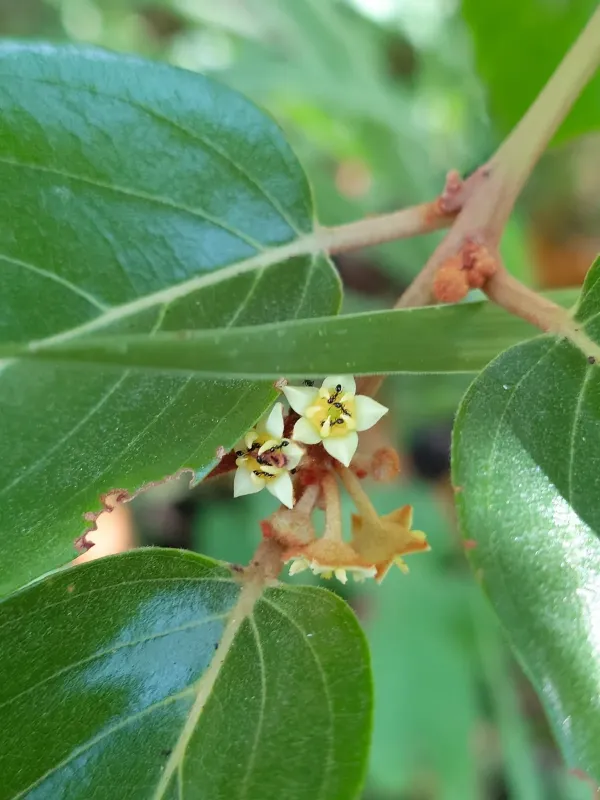
Colubrina arborescens, commonly known as coffee colubrina, is an evergreen shrub or small tree belonging to the Rhamnaceae family. It is recognized for its dense foliage, glossy leaves, and small, inconspicuous yellowish-green flowers that appear in clusters.
Originating from the Caribbean, southern Florida, and parts of Central America, this plant is naturally adapted to tropical and subtropical climates. It thrives in regions characterized by high solar radiation and periodic dry seasons, demonstrating excellent xerophytic traits.
When considering soil requirements, the species performs best in well-drained limestone or sandy soils. It is highly tolerant of nutrient-poor substrates, which allows it to flourish in coastal environments where other ornamental plants might struggle to establish.
Agricultural management for this crop focuses on initial establishment through irrigation during the first growing season. Once mature, the plant requires very little maintenance, though periodic light pruning helps maintain a desirable shape and promotes denser branch development.
Economically, the plant is valued for its hard, durable wood and its role in ecological restoration. It serves as an excellent candidate for stabilizing dunes and enhancing biodiversity in native landscaping projects due to its ability to attract local pollinators.
Main diseases and pests
The primary pests affecting Colubrina arborescens include scale insects and spider mites, which typically target the undersides of the leaves. Infestations often occur in stressed plants, making regular monitoring of leaf health an essential part of the care routine.
Fungal issues, such as leaf spot or root rot, may arise if the plant is subjected to waterlogged soil conditions. Providing adequate drainage and avoiding overhead irrigation in enclosed environments is vital to preventing the onset of these common pathogens.