
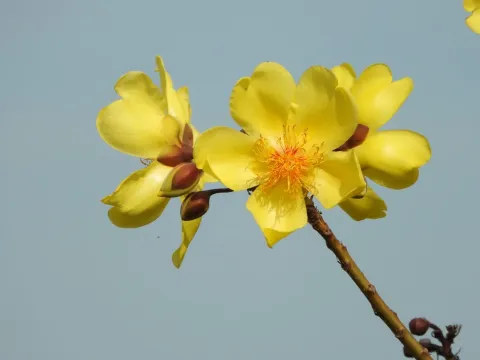
Cochlospermum
Cochlospermum
Cochlospermum belongs to the Bixaceae family and consists of a genus of tropical trees and shrubs known for their brilliant yellow flowers. These plants are biologically adapted to thrive in harsh environments, featuring deep root systems designed for survival in arid landscapes.
What the section contains

Cochlospermum
The plant originates from the tropical regions of Africa, Asia, and Australia. To achieve optimal growth, Cochlospermum requires a warm climate with constant access to sunlight, as shade significantly retards its development and flowering capabilities.
Soil requirements are relatively specific: the plant demands well-drained, porous soils. It performs poorly in heavy clay environments where water stagnation occurs, as its roots are highly susceptible to rot under anaerobic conditions.
Agrotechnical practices focus on early establishment, where initial irrigation may be necessary until the root system is fully developed. Once established, Cochlospermum is exceptionally drought-tolerant and requires little to no supplemental water in most tropical environments.
Economic utility varies by species; some are harvested for their seed fibers, which serve as a natural, sustainable alternative to synthetic materials or cotton. Additionally, certain species are valued in traditional and modern herbal medicine for their anti-inflammatory properties.
The primary threats to Cochlospermum plantations include root rot and fungal infections, typically triggered by high humidity levels and poor soil drainage. These pathogens can compromise the structural integrity of the root system, causing trees to collapse.
Pest pressure from scale insects, mealybugs, and leaf-feeding larvae can significantly reduce biomass yields. Integrated pest management strategies, emphasizing cultural control and selective biological treatments, are essential for maintaining plantation health.
Weed management during the early life cycle is crucial for success. Fast-growing competitive weeds can outcompete Cochlospermum seedlings for nutrients and sunlight, necessitating regular mechanical weeding and soil cultivation in the rows.
Nutrient deficiencies may occasionally occur in extremely sandy soils, manifesting as chlorosis in younger leaves. Periodic soil testing and precise application of organic fertilizers can rectify these issues and boost overall plant vigor significantly.
Preventing the spread of plant viruses requires careful selection of clean nursery stock. Maintaining high biodiversity around the plantation helps mitigate the risk of explosive pest outbreaks, ensuring a stable and sustainable yield over multiple seasons.