
Vlassov's Thistle
Cirsium vlassovianum
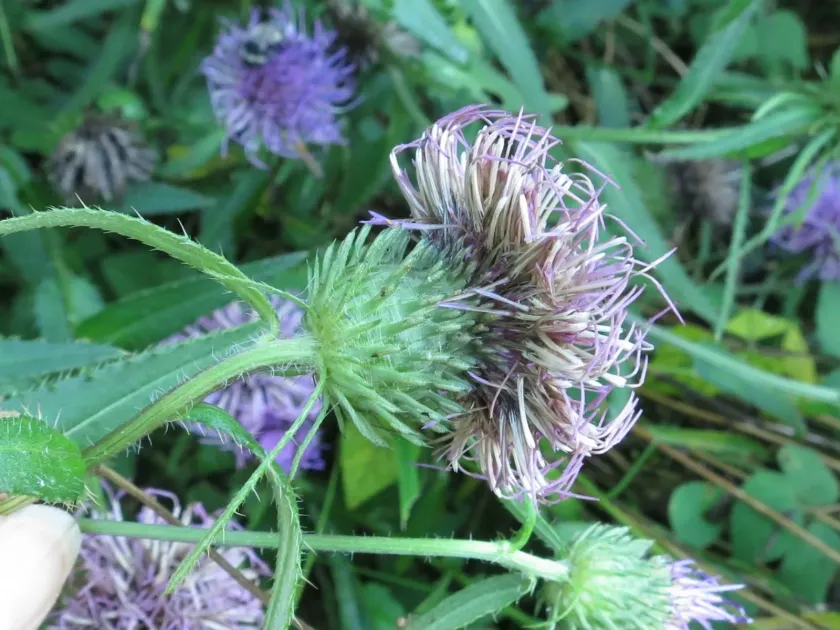
Description
Growing requirements
Vlassov's Thistle (Cirsium vlassovianum) is a perennial herbaceous plant belonging to the Asteraceae family. While not a conventional high-yield crop, it serves as an important botanical resource in wild habitats and is valued in sustainable land management.
The species originates from the Far Eastern regions, specifically Russia, China, and Korea. It thrives in its native range of damp meadows and forest borders, demonstrating a high level of resilience to changing environmental conditions.
From a botanical standpoint, the plant is characterized by a sturdy, upright stem and large, jagged, prickly leaves forming a basal rosette. The inflorescences are distinct flower heads packed with tubular florets that are highly rich in nectar.
Successful growth of Cirsium vlassovianum requires fertile, well-drained soils with consistent moisture levels. The plant is best suited to open, sunny environments, although it can tolerate partial shade, which allows it to thrive in diverse geographical niches.
In agricultural practice, its primary use is as a late-season honey source for beekeeping. Furthermore, the species is occasionally researched for its potential in soil stabilization and supporting local pollinator populations in meadows.
Main diseases and pests
The main threats to this plant are fungal infections, particularly powdery mildew and rust, which often occur when environmental humidity becomes excessively high during the summer months.
Pests typically include aphids and specialized beetles that target the floral parts of the plant, potentially reducing seed production and decreasing the vigor of the thistle stands.