
Tall thistle
Cirsium altissimum
Description
Growing requirements
Tall thistle (Cirsium altissimum) is a herbaceous perennial plant belonging to the Asteraceae family. Known for its imposing stature and ecological resilience, it is often categorized as a weed in various agricultural systems, though it serves an important role in wild ecosystems.
The species is native to North America, typically occupying habitats with abundant moisture such as forest edges, meadows, and river floodplains. It thrives in soils that are rich in organic matter, demonstrating a high tolerance for varying light conditions ranging from full sun to partial shade.
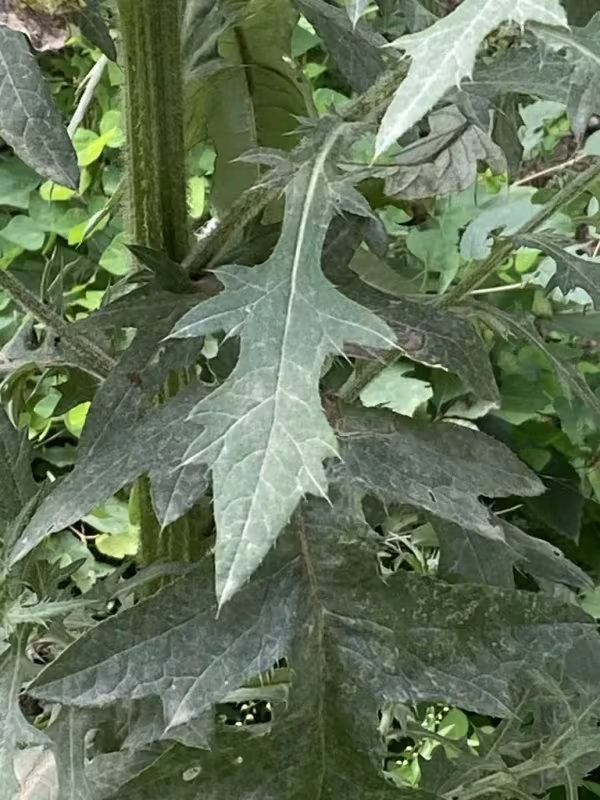
Botanically, the plant is characterized by a sturdy, upright stem that can reach heights of up to 3 meters. The leaves are typically entire or slightly lobed with spiny margins, a key adaptive feature. The flowering phase produces dense, purple-colored composite heads that are highly attractive to pollinators.
Regarding soil requirements, tall thistle prefers loam or silt-based substrates with adequate drainage. While it can survive in various soil types, its robust taproot system excels in deep soils where it can access moisture and nutrients at significant depths, allowing it to compete effectively with crops.
The plant has limited commercial use, but it is highly valued by conservationists as a prolific nectar source. Its contribution to local biodiversity through the support of bees, butterflies, and other beneficial insects makes it an occasional feature in pollinator habitat management programs.
Main diseases and pests
Tall thistle is susceptible to several fungal diseases, including powdery mildew and rust, which often emerge during humid summer months. These pathogens can significantly impair the photosynthetic capacity of the leaves, weakening the overall vigor of the plant.
Pest pressures include various species of weevils and aphids that feed on the reproductive and vegetative parts. Such infestations can lead to reduced seed viability, which serves as a natural regulator of the population growth in native environments.
Agronomic management of tall thistle usually involves mechanical removal, specifically focusing on the destruction of the crown and upper taproot. This method is most effective when performed before the seeds reach maturity, preventing further dispersal across the field.
Chemical control strategies typically rely on systemic herbicides that are absorbed by the foliage and translocated to the deep root system. This is crucial for long-term suppression, as simple defoliation does not kill the persistent underground rhizomes.
Integrated pest management (IPM) practices combine cultural methods, such as crop rotation and increased planting density, to outcompete the thistle. By limiting the availability of light and nutrients, farmers can reduce the prevalence of tall thistle in field environments.