
Cirsium appendiculatum
Cirsium appendiculatum
Description
Growing requirements
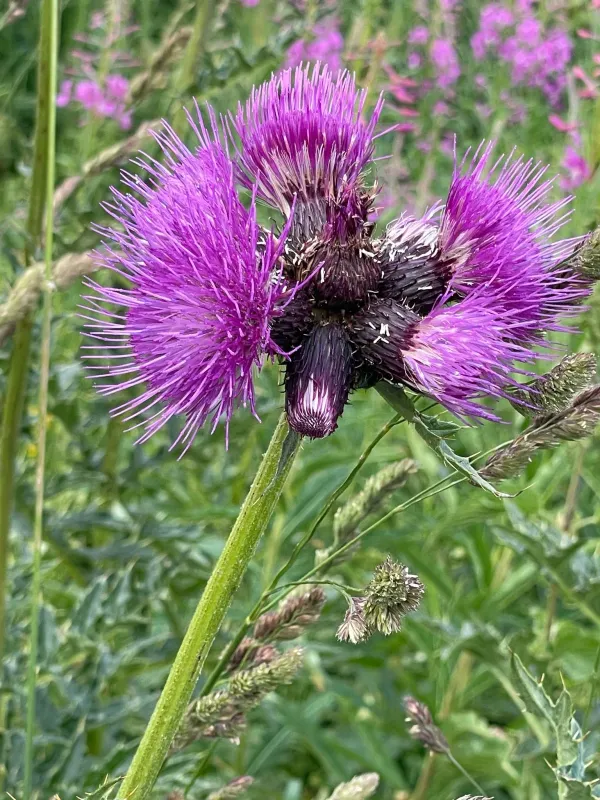
Cirsium appendiculatum is a perennial herbaceous plant belonging to the Asteraceae family. It is distinct from common invasive thistles due to its specific botanical traits and its high value as a nectar source.
The plant thrives in fertile, well-drained soils. It requires sufficient light exposure and is sensitive to waterlogging, making proper soil selection and site preparation essential for successful growth.
It is well-adapted to temperate climates and demonstrates excellent cold tolerance. This hardiness makes it a reliable perennial plant in various agricultural settings where other nectar-producing plants might fail.
Agricultural management requires consistent weed control, especially during the establishment phase, as the plant grows relatively slowly. Manual weeding or careful mechanical cultivation between rows is recommended.
Economically, this species is highly valued by beekeepers. Its flowering period provides a critical source of nectar during late summer, aiding in the buildup of honeybee colonies for overwintering.
Main diseases and pests
The main pathological threats include fungal diseases such as powdery mildew and rust. These conditions are typically aggravated by poor air circulation and excessive ambient moisture in the plantation.
Pest management focuses on controlling aphids and various leaf-feeding beetles. These pests can significantly reduce the photosynthetic capacity of the foliage and hinder bud formation.
Root rot is a major physiological concern if drainage is inadequate. Ensuring that the soil structure is friable and well-aerated is the primary preventative measure against soil-borne pathogens.
When implementing pest control measures, it is vital to select solutions that are non-toxic to pollinators, given that the plant's primary agricultural use is to support honeybee populations.
Proper density spacing helps reduce the risk of humidity-related diseases. Avoiding overcrowding ensures that foliage dries quickly after rainfall, limiting the spread of fungal spores.