
Cirsium brachycephalum
Cirsium brachycephalum
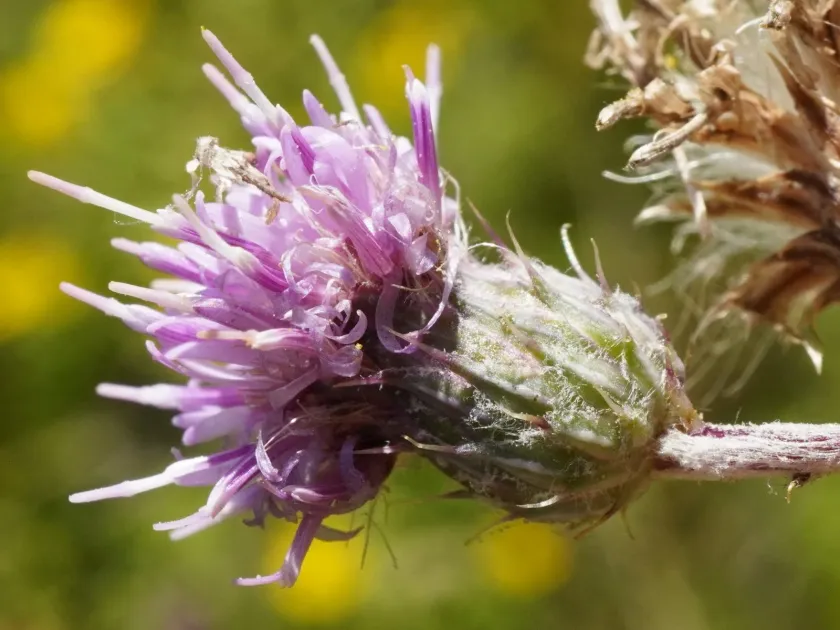
Description
Growing requirements
Cirsium brachycephalum, commonly known as a type of thistle, belongs to the Asteraceae family. In an agricultural context, this plant is recognized as a persistent perennial weed that thrives in wet conditions and poses challenges for crop production in various European regions.
The species is native to Central and Eastern Europe. It typically occupies habitats such as floodplains, wet meadows, and areas with high soil moisture content. Its geographic spread is often restricted by its dependence on groundwater and specific microclimatic conditions found in humid landscapes.
Botanically, the plant is characterized by a robust root system and a branched, upright stem. The leaves are typically serrated and armed with spines, serving as a defense mechanism against herbivores. The inflorescences are distinctively small flower heads, which are key diagnostic features for this species.
The plant demonstrates high adaptability to fertile soils with good moisture retention. It thrives in loamy substrates where nutrient availability is high, often appearing in areas that have been recently disturbed or in neglected margins of agricultural fields.
Economically, Cirsium brachycephalum is considered a competitor to primary crops. While it plays a role in supporting local pollinator populations due to its nectar production, its presence in arable land is generally mitigated to ensure maximum agricultural yield and crop quality.
Main diseases and pests
Common diseases affecting this species include rust fungi and powdery mildew. These pathogens can easily spread to surrounding vegetation, including commercial crops, making the thistle a potential focal point for disease outbreaks in agricultural environments.
Various insects and aphids are known to feed on Cirsium brachycephalum. While some of these act as biological control agents, others may migrate to nearby crops, increasing the overall pest pressure and requiring additional monitoring and protection measures from farmers.
Mechanical control measures are essential, primarily involving deep plowing and cultivation. These methods help to disrupt the root structure and prevent the vegetative propagation of the plant, which is critical for long-term reduction of the weed population in cultivated fields.
Chemical control involving systemic herbicides is widely used to manage infestations. Applications are most effective during the early growth stages, as this timing ensures that the herbicide is transported efficiently throughout the plant, including the deep-seated roots.
Implementing a rigorous crop rotation strategy helps to prevent the establishment of the species. By alternating between different crop types, farmers can disrupt the life cycle of the thistle and prevent its seeds from maturing and spreading across the entire field.