
Stemless thistle
Cirsium acaule
Description
Growing requirements
The stemless thistle (Cirsium acaule) is a perennial herbaceous plant belonging to the Asteraceae family. In agriculture, it is classified as a persistent weed rather than a cultivated crop, often causing degradation of grazing lands.
The plant thrives in calcareous, well-drained, and sun-exposed soils. It is particularly well-adapted to dry environments due to its extensive taproot system that reaches deep into the subsoil to access moisture.
Native to Europe, this species is frequently found in nutrient-poor grasslands and pastures. Its presence is often an indicator of soil compaction or overgrazing, which allows the thistle to outcompete desired forage species.
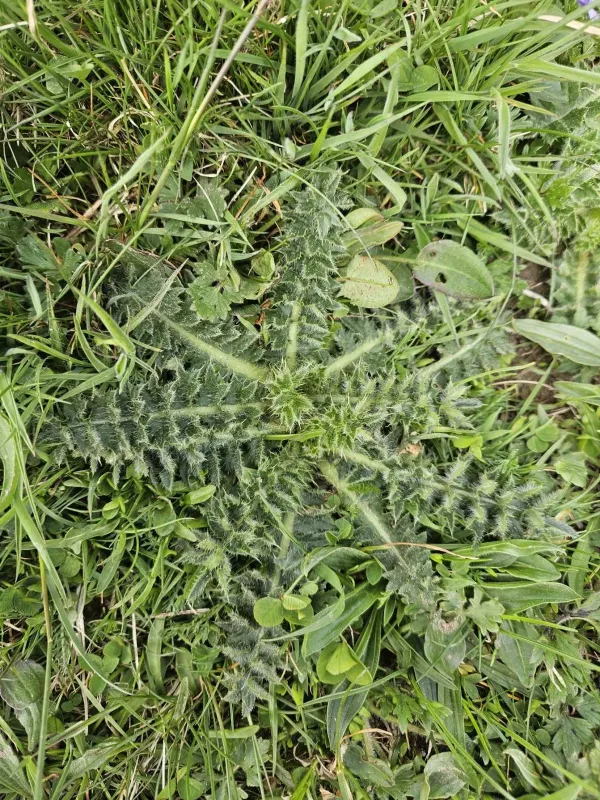
Botanically, it is characterized by its rosette growth habit, where leaves lie flat against the ground without an elevated stem. This morphological trait allows the plant to survive frequent mowing or grazing activities unscathed.
Agricultural management of this species is essential for maintaining pasture productivity. Farmers focus on increasing competition through overseeding and proper fertilization to prevent the establishment of new colonies.
Main diseases and pests
Various insect pests, such as weevils of the genus Apion, feed on the developing seeds of the stemless thistle, which can act as a natural limiting factor for its population expansion.
The plant is susceptible to several fungal diseases, such as rusts, which target the foliage. However, these pathogens rarely provide sufficient control to eradicate the weed from highly infested fields.
Physical removal is the most reliable method for local control. By cutting the root crown below the soil surface, the plant's ability to regenerate is significantly hindered.
Chemical control involving selective herbicides is effective when applied during the early rosette stage. This strategy minimizes the impact on surrounding grass species while targeting the perennial root system.
Preventative cultural practices, such as preventing bare soil patches and optimizing grazing intensity, are the most effective long-term strategies for managing Cirsium acaule populations.