
Utah thistle
Cirsium utahense
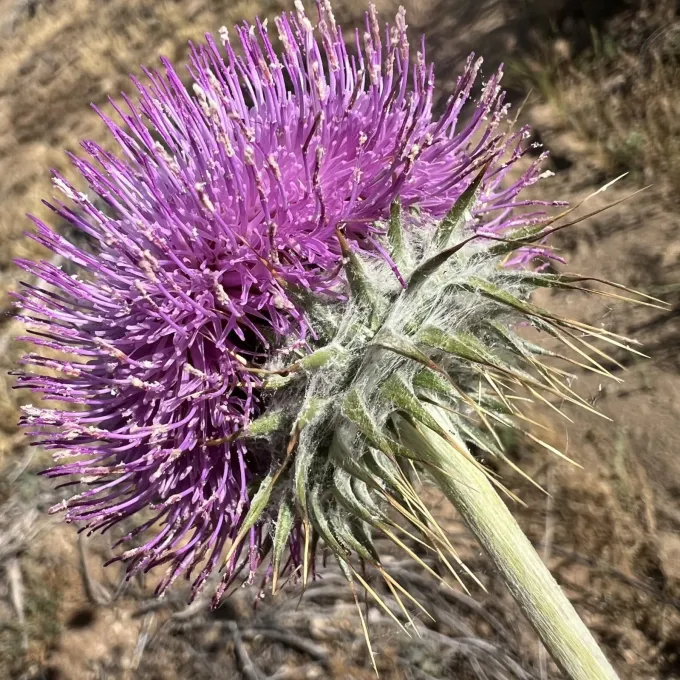
Description
Growing requirements
Utah thistle (Cirsium utahense) is a member of the Asteraceae family. It is a perennial herbaceous plant native to the arid mountainous regions of the western United States, displaying significant adaptation to drought.
The plant features a robust and deep root system designed to extract moisture from nutrient-poor and dry soils, making it resilient in harsh climatic environments where precipitation is limited.
Cultivation of this species requires well-drained soil types, such as sandy or rocky substrates. Waterlogging must be strictly avoided, as the root system is highly sensitive to root rot triggered by anaerobic conditions.
The plant is categorized as a heliophyte, meaning it thrives under full sunlight exposure. Adequate solar radiation is essential for the healthy physiological development of its foliage and flower heads.
In terms of climate, it exhibits excellent tolerance to extreme temperature fluctuations. It remains viable through hot days and cool nights, which are characteristic of its high-altitude native habitat.
Main diseases and pests
Primary threats to the Utah thistle include fungal infections such as powdery mildew or rust, particularly when environmental humidity exceeds the optimal threshold for the species.
Pest populations that typically impact this plant include various beetles and aphids. These insects feed on the plant tissues, potentially weakening the stem and foliage integrity.
Weevils are known to target the flower heads of various thistle species. Such damage directly impacts the reproductive success of the plant by affecting seed production cycles.
Effective management strategies emphasize maintaining optimal plant spacing to promote airflow, which significantly reduces the micro-climatic conditions favorable to fungal development.
Integrated pest management protocols are recommended if the plant is grown for conservation or soil stabilization purposes, focusing on monitoring for early signs of infestation.