
Wavy-leaf thistle
Cirsium undulatum
Description
Growing requirements
Cirsium undulatum, commonly known as the wavy-leaf thistle, is a perennial herbaceous plant belonging to the Asteraceae family. It is recognized as a significant weed in agricultural settings, known for its persistence and ability to thrive in disturbed soil conditions.
The plant is native to North America, occupying vast areas from the Great Plains to mountainous regions. Its range extends across diverse ecosystems, demonstrating an impressive capacity to adapt to various environmental stressors common in these regions.
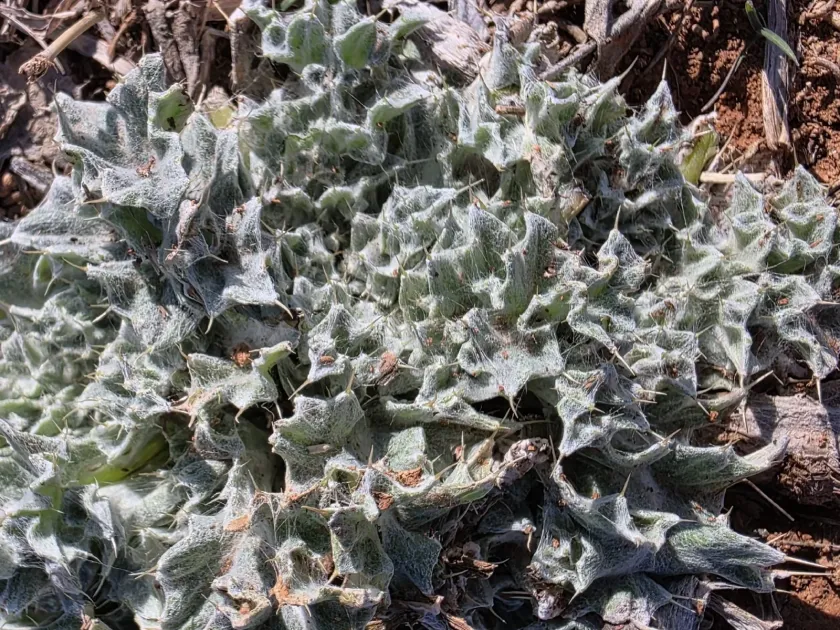
Botanically, it is defined by its characteristic wavy leaf margins and dense, white-gray pubescence on the foliage. The plant typically reaches heights between 30 and 90 centimeters, producing large, terminal flower heads that are often rose-purple in color.
Cirsium undulatum prefers sunny sites with well-drained soil, often found in meadows, grasslands, and pastures. It is highly drought-tolerant, utilizing a deep taproot to access water in deeper soil layers, which makes it resilient during arid seasons.
In farming practices, this thistle is considered a troublesome weed due to its aggressive growth habit. It competes fiercely with crops for soil moisture and nutrients, necessitating integrated management strategies to minimize its impact on yields.
Main diseases and pests
The wavy-leaf thistle serves as a host to several species of phytophagous insects. Among these, certain seed-feeding weevils and tephritid flies are known to limit the reproductive output of the plant by damaging the developing achenes within the flower heads.
Fungal pathogens, particularly rust species (Puccinia spp.), frequently infect the leaves of Cirsium undulatum. These infections lead to chlorosis and tissue necrosis, which can significantly reduce the photosynthetic capacity and vitality of the weed.
Chemical control remains the primary method for managing large infestations. Herbicides formulated for perennial broadleaf weeds, such as those containing clopyralid or 2,4-D, are typically applied to ensure translocation into the complex root system.
Cultural control methods involve frequent tillage to exhaust the plant's carbohydrate reserves. Success in controlling this weed often relies on persistent mechanical intervention, which prevents the replenishment of food stores in the rhizomes.
Integrated weed management also suggests the use of competitive cover crops to suppress seedling establishment. By creating a dense canopy, these crops limit the amount of light reaching the rosette stage of the thistle, thereby inhibiting its development.