
Ukrainian thistle
Cirsium ukranicum
Description
Growing requirements
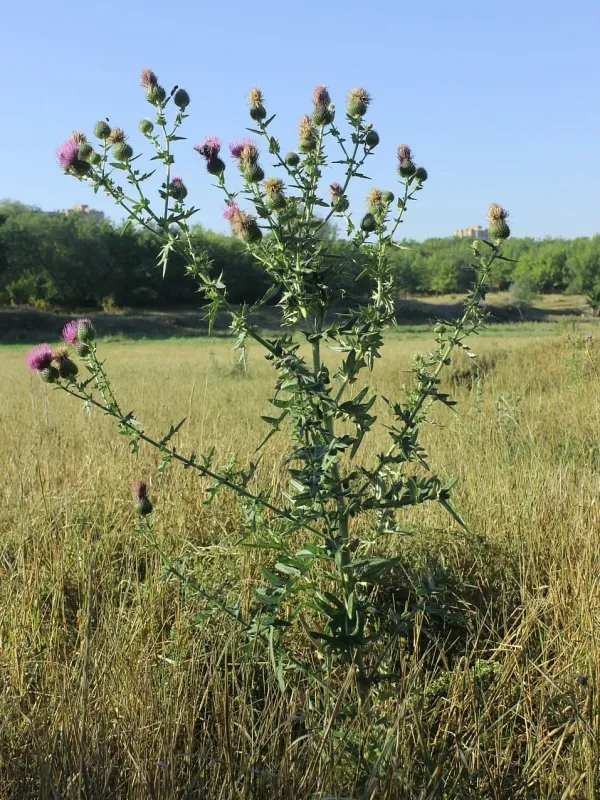
Ukrainian thistle (Cirsium ukranicum) is a member of the Asteraceae family. As a perennial herbaceous plant, it is native to the steppe and forest-steppe zones, showing high resistance to environmental stress.
Its botanical structure includes a prickly stem and deeply lobed, spiny leaves. The root system is deep and penetrating, allowing the plant to reach groundwater reserves even in dry, arid conditions typical of the summer season.
The plant thrives in nutrient-rich soils but is highly opportunistic, capable of colonizing disturbed lands. It requires full sun exposure to reach its maximum reproductive capacity and to produce its signature pink or purple flowering heads.
From an agronomic perspective, this species is often viewed as a persistent weed that competes for space and nutrients. Its resilience makes it difficult to eradicate once it establishes a strong foothold in a field.
Despite its weed status, Cirsium ukranicum provides significant ecological services as a late-season nectar source for pollinators, supporting local biodiversity and ecosystem health in regions where it dominates.
Main diseases and pests
Common fungal diseases, such as various rust species and powdery mildew, represent the primary natural threats to the Ukrainian thistle. These pathogens can significantly reduce plant vigor in high-humidity periods.
Insects like weevils and certain species of fruit flies act as natural biological regulators by feeding on the seed heads, which curtails the plant's natural spread and reduces seed bank density in the soil.
In agricultural settings, mechanical management remains the most reliable strategy. Frequent mowing before seed maturation prevents the replenishment of the seed bank and weakens the root reserves over time.
Chemical control involving selective systemic herbicides is often required in heavily infested areas to ensure full elimination of the underground root system, which is the plant's main survival mechanism.
Integrated weed management approaches suggest a combination of crop rotation and field sanitation to minimize the impact of the thistle while preserving the native plant community balance.