
Spiny thistle
Cirsium spinosissimum
Description
Growing requirements
Cirsium spinosissimum, commonly known as the spiny thistle, is a perennial herbaceous plant belonging to the Asteraceae family. This species is native to the alpine and subalpine regions of Europe, showcasing unique adaptations to high-altitude environments.
The plant thrives in moist, nutrient-rich soils. It is commonly found in alpine meadows, rocky slopes, and near mountain streams, where consistent soil moisture levels are maintained throughout the short growing season.
This species is exceptionally cold-hardy, capable of surviving extreme temperature fluctuations and late-season frosts common in mountainous regions. Its growth pattern is perfectly synchronized with the brief summer window typical of alpine climates.
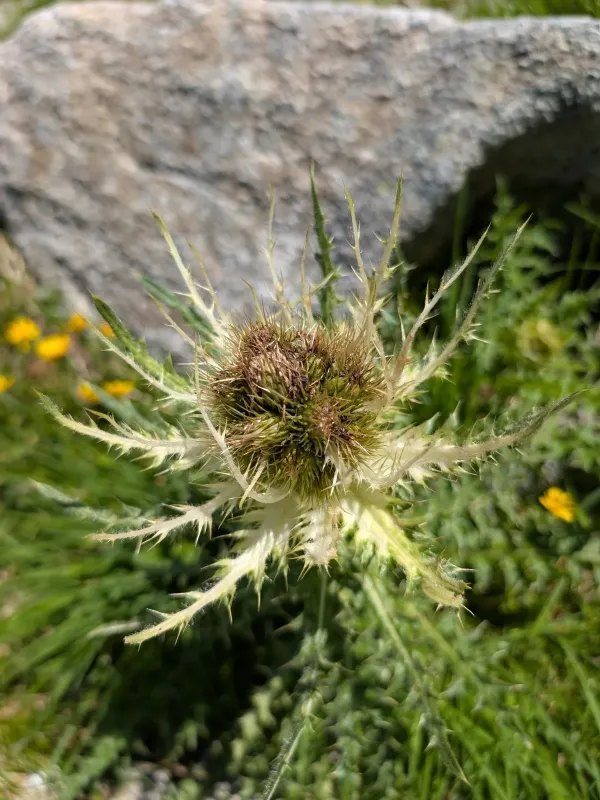
Botanically, it is recognized by its dense rosette of deeply lobed leaves and thick, spiny bracts that surround the flower heads. These defensive structures protect the plant from grazing animals and harsh wind conditions prevalent at high altitudes.
From a functional perspective, the spiny thistle is primarily recognized for its ecological importance rather than agricultural utility. It serves as a vital nectar source for various high-altitude pollinators, filling a niche in ecosystems where floral diversity is restricted.
Main diseases and pests
Common threats to Cirsium spinosissimum include various rust fungi that proliferate in the damp, cool conditions of its habitat. Additionally, the plant may be subject to infestation by specialist alpine insects and larvae that feed on its leaves and flower stems, though it has evolved significant physical defenses.