
Bull thistle (short)
Cirsium pumilum
Description
Growing requirements
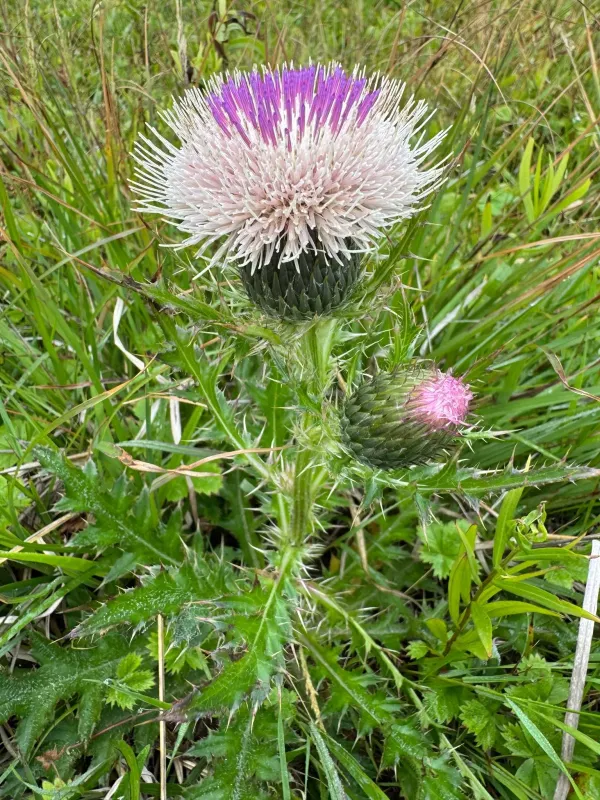
Cirsium pumilum, commonly known as pasture thistle or bull thistle, belongs to the Asteraceae family. It is a biennial or short-lived perennial herb native to the eastern parts of North America, recognized by its low stature and distinctive spiny appearance.
The plant thrives in open, sunny environments. It is frequently found in diverse habitats, including well-drained pastures, abandoned fields, and dry meadows where competition from taller grasses is relatively low.
Regarding soil conditions, Cirsium pumilum prefers mineral-rich, dry to moist soils with efficient drainage. It exhibits high adaptability to various soil textures, allowing it to colonize disturbed areas effectively.
Climatic requirements are defined by the temperate zones of its native range. It is well-adapted to withstand significant winter temperatures, ensuring survival through dormant periods as a root crown or rosette.
From a land management perspective, this plant is primarily considered an invasive or undesirable species in productive grazing lands. Its presence can reduce the overall quality and accessibility of forage for livestock.
Main diseases and pests
The plant is susceptible to several insect herbivores, including various species of weevils and moths that specifically target the capitula. These biological interactions play a role in managing population density in nature.
Fungal pathogens such as rust and powdery mildew often affect the foliage of Cirsium pumilum. These diseases typically manifest under conditions of high humidity, impacting the plant's photosynthetic efficiency.
Agricultural control methods rely heavily on mechanical mowing prior to the onset of the seed-setting phase. This prevents the spread of seeds and helps in gradually exhausting the plant's underground energy reserves.
Chemical control using systemic herbicides can be highly effective when applied during the rosette stage. Careful application ensures that surrounding desirable forage species remain unaffected by the treatment.
Crop rotation and maintaining a healthy, dense cover of competitive forage grasses are crucial for long-term suppression. Proper land management remains the most effective strategy against the encroachment of this species.