
Drooping thistle
Cirsium pendulum
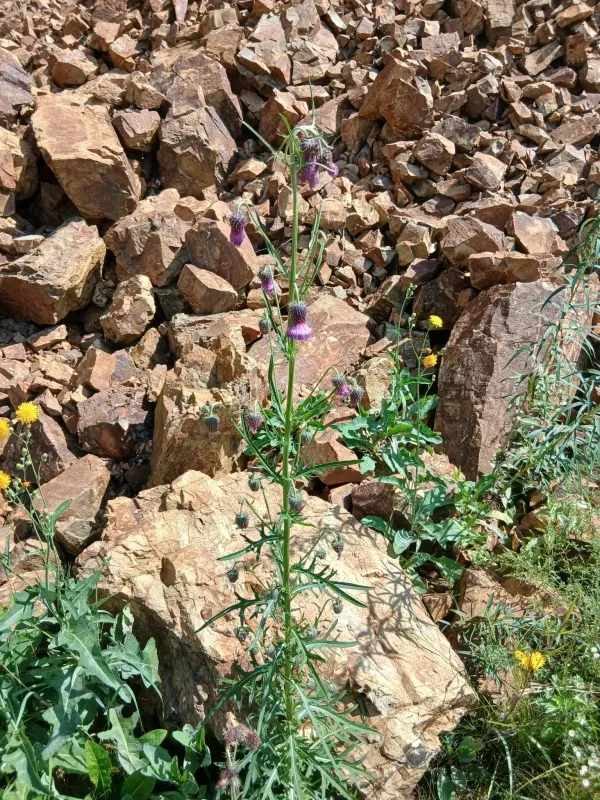
Description
Growing requirements
Drooping thistle (Cirsium pendulum) is a member of the Asteraceae family. While it possesses certain botanical interest and potential as a honey plant, it is largely recognized in agronomy as a persistent weed species in temperate regions.
The origin of this species is traced to East Asia. It is naturally adapted to ecosystems with high humidity, such as riverbanks, floodplains, and moist meadow areas where it can dominate the local vegetation.
Morphologically, the plant is characterized by a robust, tall stem and deep-seated root systems. Its leaves are typically large and deeply lobed, often armed with small prickles that serve as a defense mechanism against herbivores.
The climate requirements for Cirsium pendulum revolve around high moisture availability. It thrives in temperate zones with significant precipitation, as it lacks the physiological adaptations necessary to survive severe drought conditions.
Regarding soil preferences, it favors fertile, well-structured soils with good drainage, though it is highly tolerant of moist conditions that would cause root rot in other species. High fertility levels in the soil facilitate the rapid spread of this plant.
Main diseases and pests
Several types of fungal infections pose a threat to the plant, with rust and mildew being the most prominent. These diseases can limit the plant's ability to store energy in its root system, thereby reducing its perennial vigor.
Insects such as weevils and leaf beetles are common pests. They feed primarily on the flower heads and developing seeds, which serves as a natural biological control mechanism that restricts the population growth of the thistle.
Agronomic management usually involves mechanical disturbance, such as deep tilling. This process uproots the perennial crown and disrupts the root network, which is the primary source of vegetative regrowth in the spring.
Chemical intervention remains a reliable method in commercial agriculture. Systemic herbicides applied during the vegetative stage ensure that the active ingredients are transported to the roots, preventing future shoots from emerging.
Integrated weed management also focuses on crop competition. Planting competitive cover crops can shade out the seedlings of the drooping thistle, preventing them from establishing themselves in the field during the early growth stages.