
Western thistle
Cirsium occidentale
Description
Growing requirements
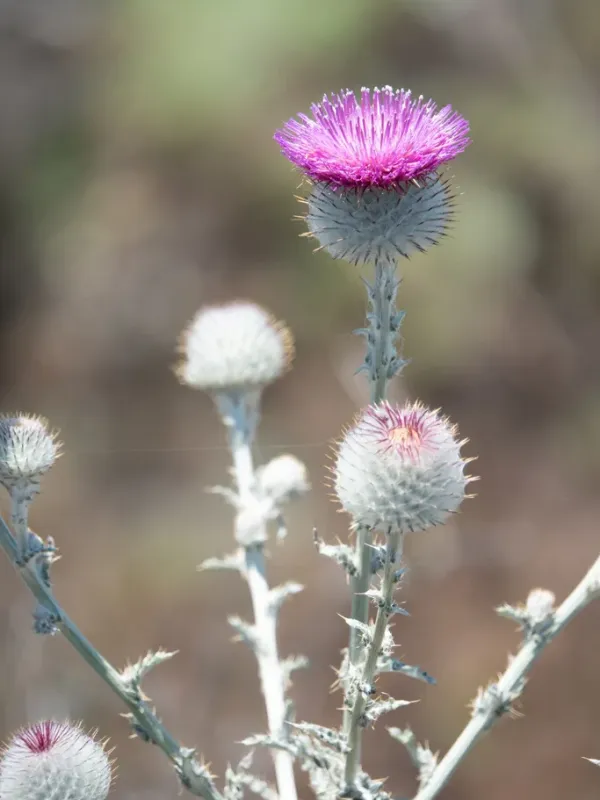
The Western thistle (Cirsium occidentale) is a perennial herbaceous plant belonging to the Asteraceae family. It is distinct from many of its relatives due to its dense, white, cobweb-like tomentum that covers the stems and leaves, giving the plant a stunning silver-white appearance.
This species is native to western North America, specifically distributed across California and Oregon. It naturally thrives in diverse habitats, ranging from coastal bluffs to open mountain slopes, where it prefers soils with high drainage properties and minimal competition.
The plant requires full sun exposure to maintain its compact growth habit and silver coloration. It is highly adapted to Mediterranean-style climates, characterized by wet winters and long, dry, hot summers, making it an excellent candidate for water-wise gardening.
Agricultural and gardening management for this species focuses on soil aeration. It performs best in sandy or gravelly soil profiles. Over-enrichment of the soil should be avoided, as the Western thistle is adapted to relatively low-nutrient environments and may become leggy if over-fertilized.
In terms of practical utility, the Western thistle serves as a vital ecological resource, providing essential nectar for native pollinators, including butterflies, bumblebees, and other beneficial insects. Its aesthetic appeal makes it a popular choice for xeriscaping and native plant garden designs.
Main diseases and pests
The primary threats to the health of the Western thistle include fungal pathogens caused by improper drainage and excessively high humidity levels during the growing season. Powdery mildew is the most common foliar issue, which can detract from the plant's visual appeal.
Insect pests such as aphids and specialized thistle-feeding beetles can occasionally cause damage to flower heads or foliage. Integrated pest management strategies, emphasizing the safety of native pollinators, are recommended if intervention becomes necessary to manage infestations.