
Cirsium obvallatum
Cirsium obvallatum
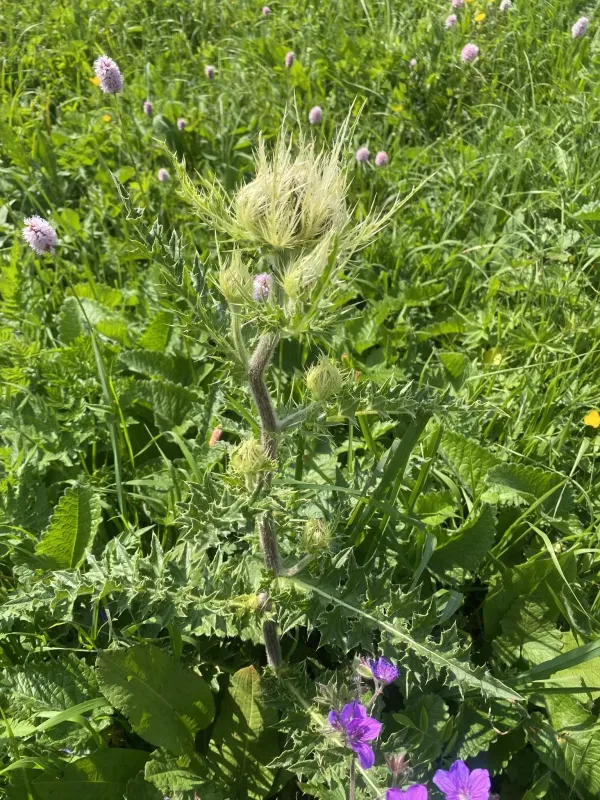
Description
Growing requirements
Cirsium obvallatum is a perennial herbaceous plant belonging to the Asteraceae family. Known for its distinct appearance, it is often studied in the context of botanical diversity and its potential as a supplementary honey-producing flora.
The plant thrives in moist, nutrient-rich soils and is typically found in mountain meadows and forest clearings. It exhibits a high degree of cold tolerance, allowing it to persist in regions with harsh winter conditions.
Geographically, it is native to the Caucasus region and surrounding mountainous zones. Its evolutionary adaptations allow it to survive in environments where many standard agricultural crops would struggle to grow.
Botanically, it is defined by large, leafy bracts that surround the flower heads, providing protection and a unique structural shape. These structures are vital for the plant's identification and reproductive success.
Economically, while not a commercial staple, it serves an important function in ecological restoration and as a valuable nectar source for pollinators, significantly aiding local bee populations during late-season blooming.
Main diseases and pests
Rust diseases caused by various fungal pathogens are the most common health threats to the plant. These infections can damage photosynthetic leaf tissue and reduce overall plant vigor.
Insects such as weevils and certain types of caterpillars can cause significant damage to the floral heads, interfering with the plant's ability to produce nectar and seeds effectively.
Root rot becomes a major concern in waterlogged soils, which may occur during heavy rainfall seasons. Ensuring proper soil drainage is essential for maintaining a healthy and resilient stand.
Competition from more aggressive, invasive weed species can suppress Cirsium obvallatum growth, especially during the seedling stage. Timely maintenance is required to prevent loss of habitat.
Due to its status as an important honey plant, chemical pesticide application should be strictly avoided or replaced with biological control agents to preserve the health of beneficial insect populations.