
Swamp thistle
Cirsium muticum
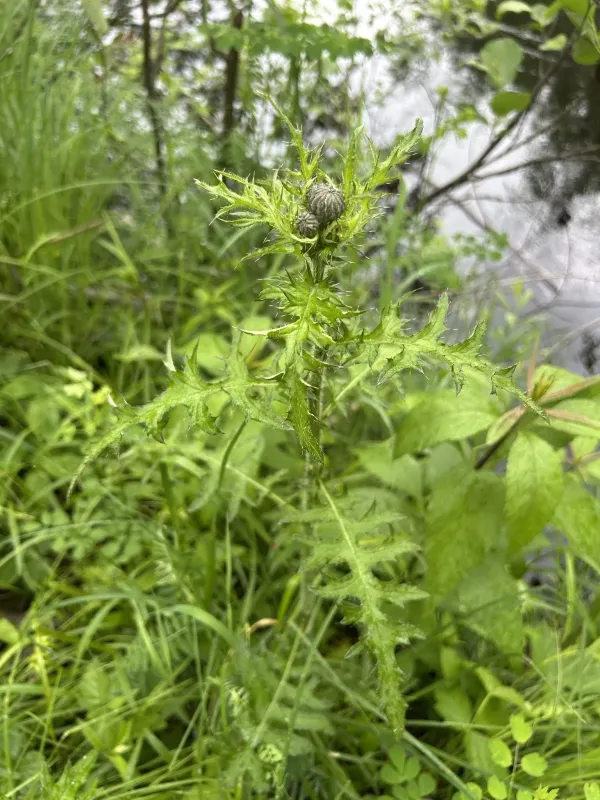
Description
Growing requirements
Swamp thistle (Cirsium muticum) is a perennial or biennial plant belonging to the Asteraceae family. While it is not a cultivated crop, understanding its biology is essential for managing vegetation in moisture-rich agricultural lands and pastures.
The plant is native to North America, where it thrives in wetlands, swamps, and damp meadows. It is characterized by its adaptability to saturated soil conditions where many other competitive plant species may struggle to establish deep roots.
Botanically, it lacks the aggressive spines found on many other thistle species, which is reflected in its name. It grows vertically and produces distinct purple flower heads that attract various pollinators, making it a significant plant in local wild ecosystems.
The plant requires high moisture levels and prefers environments with consistent water supply. Its ability to tolerate shade allows it to survive in overgrown areas, where it often competes with desirable grasses for available soil nutrients and light.
In terms of agricultural significance, while it serves as a nectar source, it is largely considered a weed. Its rapid colonization of damp pastures can reduce overall yield and degrade the quality of livestock forage if left unchecked.
Main diseases and pests
The swamp thistle can be susceptible to various rust fungi that affect foliage, potentially weakening the plant. Despite these natural threats, it remains a robust colonizer in its preferred ecological niches, rarely suffering total population failure.
Insect pests, including weevils and aphids, may inhabit the plant and consume its tissues. However, these rarely exert enough pressure to act as a primary method of biological control in an agricultural setting, necessitating active intervention.
Mechanical control involves cutting the stems before seed set to prevent further dispersion. Since the seeds are wind-borne, it is vital to clear surrounding buffer zones to keep the infestation from spreading to productive agricultural fields.
Chemical control methods include the use of selective herbicides applied during the rosette stage. Timely application is crucial, as the plant becomes more resistant to chemical treatments as it matures and develops a deep root structure.
Successful management strategies focus on preventing seed production and improving land drainage where possible. By increasing the competition from desirable crops through better fertilization and proper grazing management, farmers can limit the thistle's establishment.