
Mountain thistle
Cirsium montanum
Description
Growing requirements
The mountain thistle (Cirsium montanum) is a member of the Asteraceae family. It is a perennial herbaceous plant native to mountainous areas, characterized by its adaptation to cool climates and specific soil conditions typical of alpine and subalpine meadows.
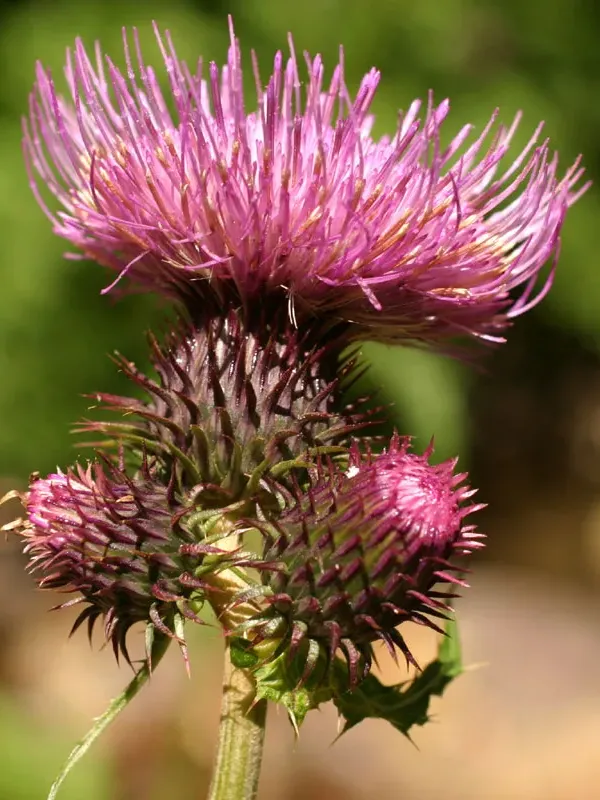
Botanically, the plant features a robust stem, characteristic thorny leaves, and distinct purple flowering heads. Its root system is deeply embedded, allowing it to extract nutrients efficiently from soil horizons often inaccessible to shorter-rooted crops.
The crop thrives in well-drained, fertile, and loamy soils with a neutral or slightly acidic pH. Excessive moisture stagnation must be avoided to prevent root rot, particularly during the dormant period, as the plant prefers airy, moisture-retentive substrate.
Environmental conditions require moderate light levels and protection from extreme heat. While the species is rugged, optimal vegetative growth is achieved in temperate conditions where the soil temperature remains stable throughout the spring and early summer.
The agricultural and economic utility of Cirsium montanum is centered on its role as a botanical source for bioactive compounds and its potential as a specialized forage or nectar source, depending on the specific management objectives.
Main diseases and pests
The primary threats to mountain thistle crops include fungal pathogens such as rust and powdery mildew. These diseases often emerge when environmental humidity is high, hindering the plant’s photosynthesis and reducing biomass quality.
Pests such as aphids and various species of weevils commonly infest the stems and floral structures. These pests can cause significant damage to the plant tissue and reduce the success rate of pollination and seed development.
Integrated pest management (IPM) is essential for this crop. It involves regular scouting to identify early signs of infestation and the use of targeted biological controls to minimize reliance on synthetic chemical applications.
Strategic planting, ensuring adequate spacing between individual plants, helps improve air circulation, which significantly decreases the susceptibility of the crop to airborne fungal spores and pathogen buildup.
Maintaining balanced soil nutrition is also critical, as nutrient deficiencies or imbalances can weaken the plant’s natural defense mechanisms, making it more prone to secondary infections from soil-borne pathogens.