
Broad-leaved thistle
Cirsium latifolium
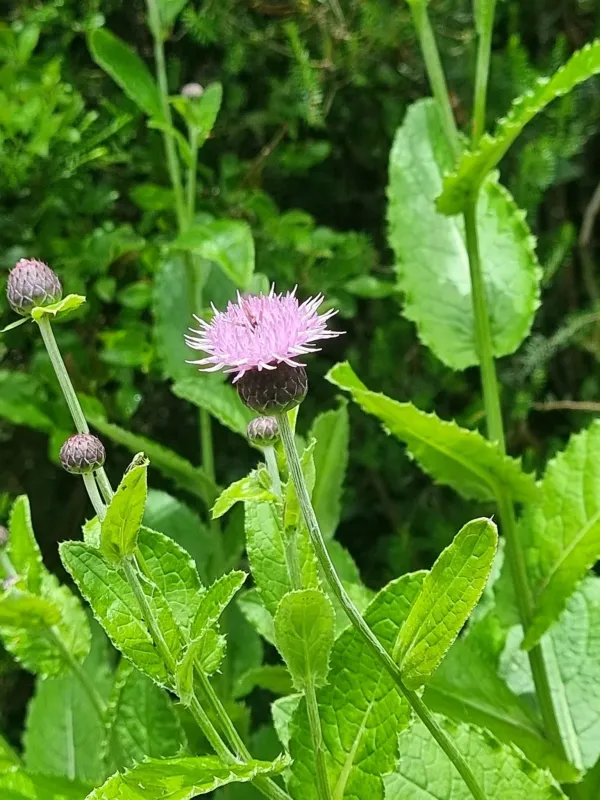
Description
Sowing dates
Broad-leaved thistle, scientifically known as Cirsium latifolium, belongs to the Asteraceae family. In agricultural settings, it is classified as a significant perennial weed rather than a crop, often encroaching on arable lands.
The plant primarily propagates via wind-dispersed seeds and vegetative spread. The seeds germinate in early spring, establishing a strong rosette of leaves that quickly claims space in the field environment.
The underground root system is highly regenerative. New shoots can emerge from root buds even after the surface growth has been destroyed, which makes the plant a challenging competitor for agricultural crops.
Its life cycle involves a multi-year development period, during which it builds up substantial energy reserves in the roots, allowing it to re-sprout persistently throughout the growing season.
In modern farming, keeping this weed in check is essential for maintaining crop yields, as its presence directly competes with crops for nutrients, sunlight, and soil moisture.
Growing requirements
Cirsium latifolium exhibits a high degree of ecological plasticity. It thrives in various environments, preferring nutrient-rich, deep soils, which explains why it is commonly found in managed agricultural fields.
It demands plenty of sunlight for optimal development. While it can survive in the shade of dense crop canopies, its growth rate is significantly lower compared to plants growing in open, disturbed areas.
The plant is tolerant of varying soil pH levels but prefers neutral to slightly acidic conditions. It also possesses a robust root system capable of navigating different soil textures, from light loams to heavy clays.
Water availability is critical during the initial growth stages, though the mature plant can endure short-term water stress thanks to its deep root structure that reaches deeper soil horizons.
Effective management requires ensuring competitive crop growth, proper seedbed preparation, and implementing crop rotation strategies that discourage the establishment of persistent perennial weeds.
Main diseases and pests
The broad-leaved thistle acts as a reservoir for various plant pathogens. Fungal infections, including rusts, can thrive on the foliage and eventually spread to neighboring wheat or grain fields.
Insect pests such as aphids and specialized coleoptera often use this plant as a host. These pests can cause direct damage to the thistle, but more importantly, they often migrate to surrounding commercial crops.
While some lepidoptera species feed on the leaves of the thistle, they rarely exert enough pressure to control the weed population effectively, necessitating proactive management measures.
Chemical control involving systemic herbicides is widely used in conventional agriculture. These chemicals are designed to be absorbed through the leaves and translocated to the roots to kill the entire plant.
Mechanical cultivation remains a standard preventative measure. Deep plowing helps to sever the root connections, exposing them to environmental conditions that can dehydrate and weaken the plant structure.