
Italian thistle
Cirsium italicum
Description
Growing requirements
The Italian thistle (Cirsium italicum) belongs to the Asteraceae family. This species is native to the Mediterranean basin, where it thrives in diverse environments ranging from rocky slopes to degraded grasslands.
The plant requires full sun exposure and well-drained soils. It is particularly well-adapted to limestone-derived soils, showing high tolerance to varying levels of moisture throughout the growing season.
Climatically, it is suited to Mediterranean-type climates characterized by mild, wet winters and dry summers. The plant develops a robust root system, which is essential for survival during periods of environmental stress.
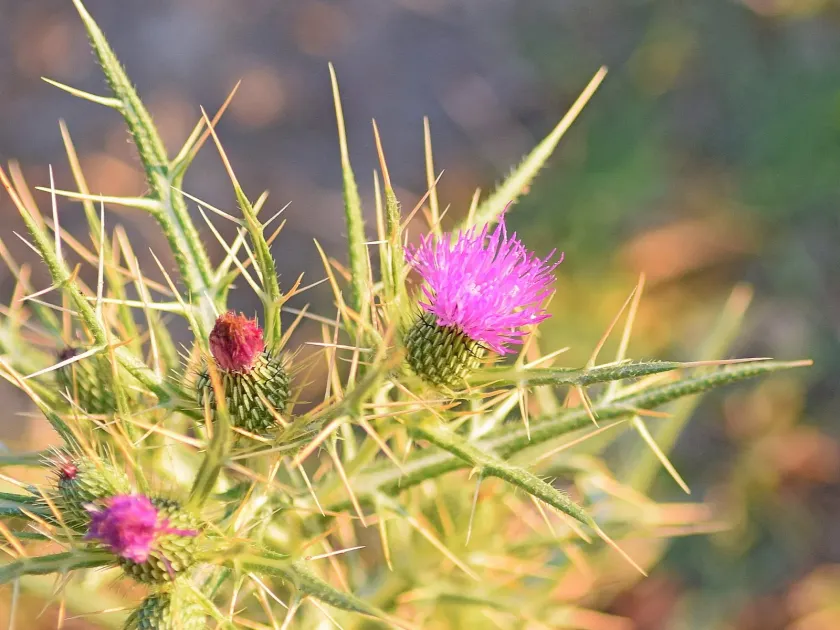
Morphologically, Cirsium italicum features a dense arrangement of spiny foliage and flower heads, which serve as a natural defense mechanism against herbivores and environmental grazing pressure.
Economically, the species is not cultivated as a primary agricultural crop. Its value is predominantly ecological, serving as a significant source of nectar for local bee populations and beneficial insects.
Main diseases and pests
The primary biological threats to the Italian thistle include fungal infections such as rusts and mildews, which can cause significant foliar damage under suboptimal, high-humidity conditions.
Various insect pests, including stem-boring larvae and seed-feeding beetles, pose a threat to the plant's reproductive cycle and structural integrity during the peak blooming phase.
Invasive grasses and other competing ruderal species often outcompete the Italian thistle in nutrient-rich environments, leading to a decline in its localized distribution.
Mechanical control measures, including mowing during the flowering period, are effective strategies to prevent seed set and limit the spread of the plant in pasture management.
Chemical herbicides designed for broad-leaved weed control are often highly effective, frequently resulting in a sharp reduction of the population density in agricultural areas.