
Yellow thistle
Cirsium horridulum
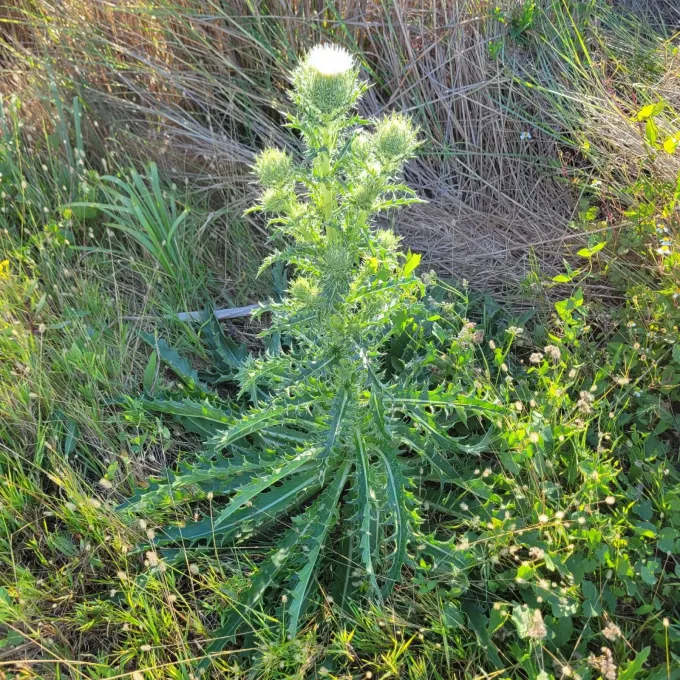
Description
Growing requirements
Yellow thistle (Cirsium horridulum) is a biennial plant species belonging to the Asteraceae family. It is recognized for its robust growth habit and characteristic spiny foliage, which makes it a challenging weed in various agricultural and ecological settings.
The species is native to parts of North America and has adapted to a wide range of soil types, from well-drained sandy soils to more heavy, moisture-retentive loams. Its natural range reflects a high degree of environmental plasticity.
Botanically, it features a significant basal rosette stage, typically occurring in its first year, followed by the development of a stout, flowering stem. The entire plant is well-protected by sharp spines, which deter herbivory effectively.
Climatic requirements are primarily linked to temperate conditions. Yellow thistle thrives where adequate solar radiation is available, as it is a highly photophilous plant that struggles under dense canopy covers or severe shading.
Agronomic management requires a strategic approach focusing on the prevention of seed set. Due to its biennial life cycle, preventing the plant from reaching the flowering stage is the most effective way to exhaust the soil seed bank over time.
Main diseases and pests
Yellow thistle populations can be impacted by various fungal pathogens, such as rusts, which can cause significant tissue necrosis. These natural diseases play a role in regulating population dynamics within native ecosystems.
Insects, particularly specialized weevils and leaf beetles, are known to feed on the foliage and reproductive structures of the plant. These biotic agents provide a form of natural suppression that is often studied for biocontrol potential.
Farmers should implement integrated pest management strategies to limit the thistle's impact. This includes monitoring for potential pathogen crossover, where diseases prevalent on the weed might affect nearby crop species.
Mechanical control, such as mowing or deep cultivation, is often employed before the flowering stage to prevent seed dispersal. However, care must be taken to minimize soil disturbance that could encourage secondary germination of dormant seeds.
Chemical control remains a staple in commercial agriculture, with systemic herbicides being highly effective when applied during the active growth phases. Precision application helps minimize the impact on surrounding crop plants and beneficial insects.