
Cirsium glabrum
Cirsium glabrum
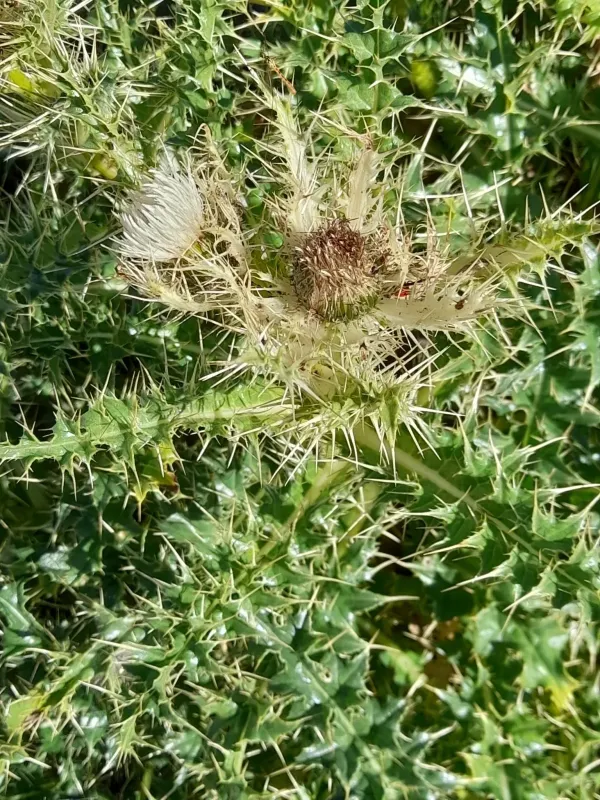
Description
Sowing dates
Cirsium glabrum is a perennial herbaceous plant belonging to the Asteraceae family. In an agricultural context, it is considered a persistent weed that spreads both via seeds and through an extensive underground root system.
Germination typically occurs in early spring when temperatures become favorable. The plant quickly establishes a taproot, allowing it to survive harsh conditions and regenerate even after partial damage to the surface growth.
During its initial growth phase, the plant focuses on developing a basal rosette of leaves. These leaves have a characteristic smooth surface, distinguishing it from other more pubescent species within the Cirsium genus.
The plant has a wide distribution range, demonstrating high adaptability to various temperate climate zones. It can colonize abandoned fields, pastures, and disturbed soil areas with ease.
Agricultural management is essential because once established, the plant becomes difficult to eradicate. Early intervention during the seedling stage is recommended to prevent deep root system formation.
Growing requirements
This species is highly flexible regarding soil requirements and can thrive in various soil textures ranging from heavy clays to well-drained loams. It does not demand high soil fertility but responds vigorously to nitrogen-rich environments.
Sunlight is a key factor for its development. Being a heliophyte, it thrives in open areas where it does not have to compete with dense vegetation or shaded canopies.
Moisture requirements are moderate. The plant is drought-tolerant due to its ability to explore deep soil layers, making it a resilient competitor in changing weather conditions.
Soil pH levels generally do not limit its growth, as it can adapt to both acidic and alkaline conditions. Proper soil aeration is beneficial, but the plant persists well in compacted soils as well.
Effective management requires a combination of mechanical control, such as deep plowing, and cultural practices like crop rotation to exhaust the plant's nutrient reserves in the roots.
Main diseases and pests
The plant is susceptible to various fungal pathogens, which can affect its overall vigor. Fungal infections, especially in humid conditions, can significantly impair stem health and reproductive capabilities.
Insects that target the seed heads act as natural biocontrol agents, reducing the number of seeds produced annually. This is vital for maintaining ecological balance where the species is native.
Chemical control involving systemic herbicides is standard in large-scale agriculture. These treatments are typically applied when the plant is in the rosette stage to ensure optimal translocation to the roots.
Crop competition is an effective biological strategy against this weed. Dense, healthy crop stands reduce the light availability, significantly stunting the growth of Cirsium glabrum.
- Rust fungi (Puccinia spp.)
- Stem-boring insects
- Flower-head weevils
- Root aphids
- Powdery mildew