
Flodman's thistle
Cirsium flodmanii
Description
Growing requirements
Flodman's thistle (Cirsium flodmanii) is a perennial herbaceous plant belonging to the Asteraceae family. In agricultural landscapes, it is recognized as a persistent weed that poses a significant challenge due to its extensive creeping root system and high regenerative capacity.
Native to North America, this species thrives in open prairies, meadows, and disturbed sites. It is remarkably adaptable, showing resilience in both moist soils and dry, sun-exposed environments where other flora may struggle to compete for moisture and nutrients.
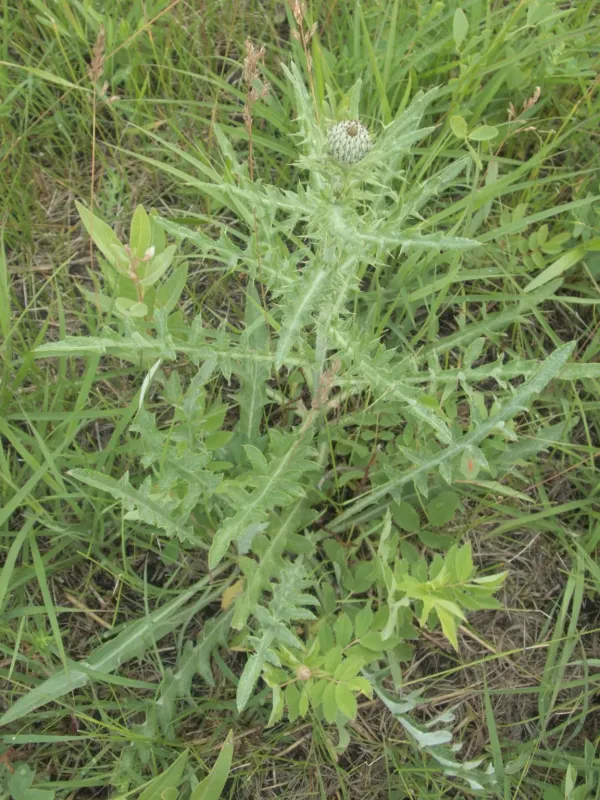
The botanical structure of the plant consists of a prickly, pubescent stem reaching heights of up to 80 centimeters. Its deep-lobed, spiny leaves provide a defense mechanism against herbivory, ensuring that it remains largely untouched by grazing livestock in infested pastures.
The plant exhibits a dual reproductive strategy: it propagates via wind-dispersed seeds and through vegetative growth from underground rhizomes. This allows Flodman's thistle to colonize new areas rapidly and establish stable, long-term populations within field borders and crop land.
Soil requirements for Cirsium flodmanii are broad, as it adapts to various soil textures ranging from heavy clays to well-drained loams. It prefers areas with high solar radiation, which facilitates the rapid development of its complex root network during the growing season.
Main diseases and pests
The primary agricultural threat posed by Flodman's thistle is the competition for essential resources, which leads to reduced yields in both cash crops and forage production. Dense patches of the weed can effectively smother desirable forage species in pastures.
Pests and diseases, such as various rust fungi and gall-forming insects, may target Flodman's thistle. However, these natural agents rarely provide sufficient control in intensive farming scenarios, necessitating active intervention by the producer to maintain productivity.
Effective management strategies focus on preventing seed set and depleting root reserves. This is typically achieved through integrated pest management (IPM), including the strategic timing of herbicide application and repeated mechanical cultivation to stress the root systems.
Successful control depends on identifying the weed in its early rosette stage. Once the root system is well-established, it becomes significantly more difficult to manage using standard tillage methods, as even small root fragments can lead to new individual plants.
From a commercial perspective, Flodman's thistle is strictly categorized as a nuisance weed. Farmers are advised to maintain robust crop stands and implement clean-field policies to minimize the risk of infestation and the subsequent economic burden caused by this species.