
Fierce Thistle
Cirsium ferox
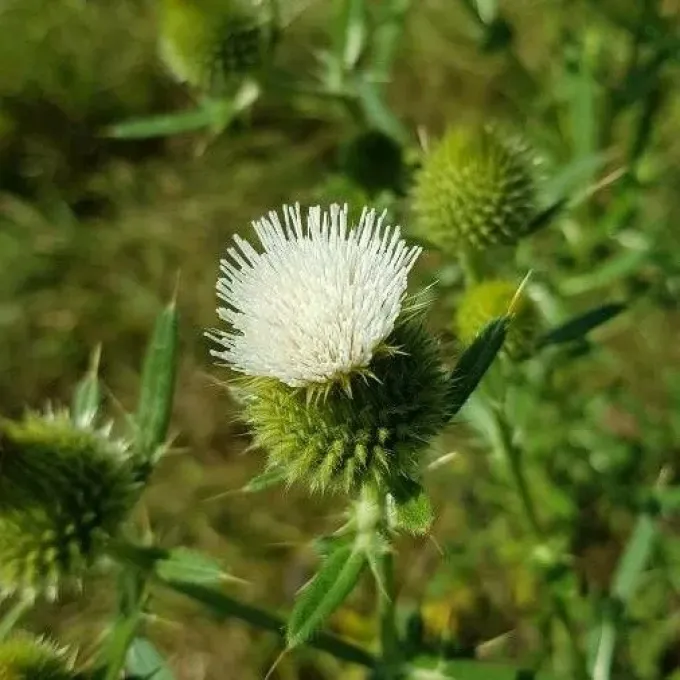
Description
Growing requirements
Fierce Thistle (Cirsium ferox) is a robust biennial plant belonging to the Asteraceae family. Known for its distinct spiny structure, it exhibits high biological adaptability and vigor within its natural Mediterranean habitat.
The plant thrives in well-drained, sun-exposed soils. It prefers nitrogen-rich environments, which support its rapid development from a basal rosette to a mature flowering stage in its second year of growth.
Climate-wise, it shows a preference for temperate zones with mild winters. Its deep taproot provides significant drought resistance, making it capable of surviving in regions with irregular precipitation patterns.
Regarding soil, it is not overly demanding, though it excels in light, loamy, or slightly alkaline substrates. Soil compaction should be avoided to ensure proper root development and nutrient uptake.
Agronomic management requires strategic planning. Due to its aggressive nature, containment measures are essential to prevent competition with main crops. Effective mechanical and chemical control methods are standard in professional settings.
Main diseases and pests
Fierce Thistle is susceptible to various fungal pathogens, most notably rust (Puccinia spp.). These fungi manifest as pustules on the leaf surface, which can significantly hinder the plant's photosynthetic capacity.
Insect pests, such as aphids and specialized weevils, often target the flower buds and tender shoots. These attacks can weaken the plant and reduce its ability to produce viable seeds.
Root rot is a potential threat when the soil remains waterlogged for extended periods. Poor drainage promotes the growth of anaerobic soil bacteria that damage the vascular system of the thistle.
Powdery mildew represents another common fungal issue, particularly in dense stands with low air circulation. It typically appears as a white coating on the leaves, severely stunting overall growth.
Management strategies involve a combination of biological monitoring and targeted interventions. Ensuring adequate spacing and promoting healthy plant vigor are key to reducing the impact of these typical threats.