
Yellow melancholy thistle
Cirsium erisithales
Description
Growing requirements
Cirsium erisithales, commonly known as the yellow melancholy thistle, is a perennial flowering plant within the Asteraceae family. It is primarily recognized as a wild species native to mountainous regions of Europe, often found in subalpine and alpine zones.
The plant thrives in nutrient-rich, moist, and well-drained soils. It prefers semi-shaded environments, such as forest edges or woodland clearings, where it can access sufficient soil moisture during the peak summer months.
Regarding climate, Cirsium erisithales is highly resilient to cold temperatures. It is well-adapted to high altitudes and cool mountain summers, showing strong tolerance to frost and extreme environmental conditions typical of alpine zones.
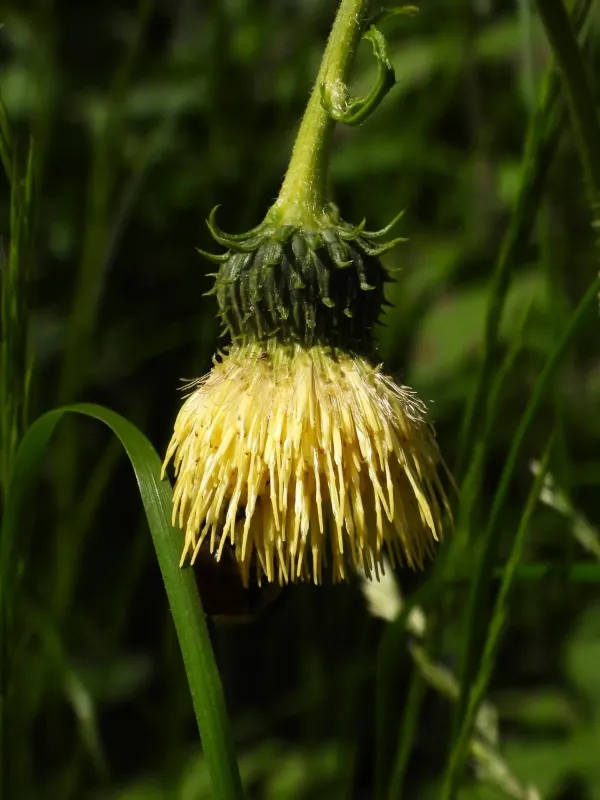
The botanical structure is unique due to the presence of glandular, sticky hairs covering the stem and flower heads. The leaves are typically serrated and armed with prickles, providing an effective defense mechanism against herbivores.
In terms of хозяйственного (economic) use, the plant serves as a late-season nectar source for pollinators. Its presence is vital for maintaining insect biodiversity in mountain meadows, supporting honeybee populations during periods of floral scarcity.
Main diseases and pests
Fungal diseases represent a significant threat to the plant's health, particularly rust and powdery mildew. These infections typically develop in areas with poor ventilation and high humidity, leading to premature leaf drop.
Several types of coleopteran insects, including leaf beetles and weevils, act as primary pests. They consume the plant tissue and flower parts, which negatively affects the reproductive output and overall vitality of the thistle.
Aphid infestations are frequently observed on the stem and flower buds. These sap-sucking insects drain the plant of nutrients and may introduce secondary pathogens that complicate the plant's development.
Interspecific competition from invasive weed species can suppress the growth of Cirsium erisithales in disturbed areas. If the natural environment is heavily modified, the thistle often loses its habitat to more aggressive competitors.
Control of these threats should focus on maintaining natural biodiversity rather than chemical intervention. Integrated pest management strategies are generally unnecessary for this wild species, as it balances naturally within stable ecosystems.