
Woolly thistle
Cirsium eriophoroides
Description
Growing requirements
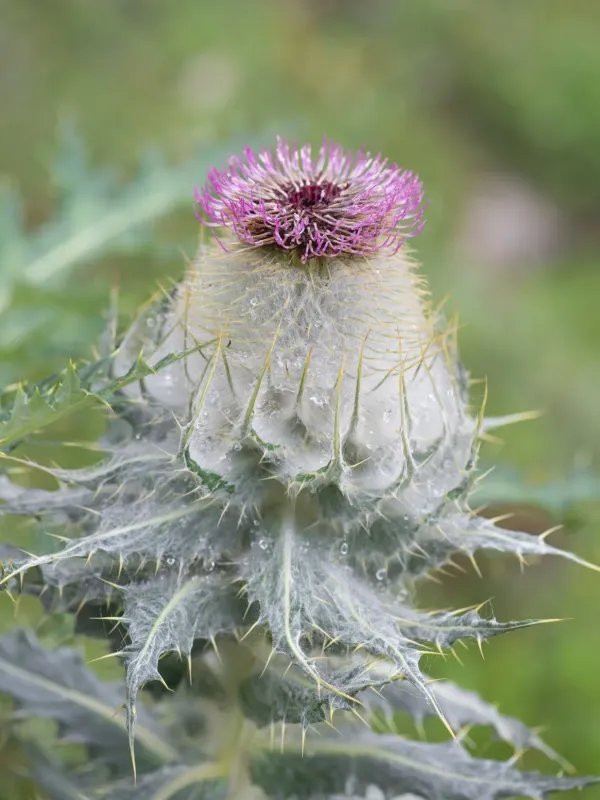
Woolly thistle (Cirsium eriophoroides) is a member of the Asteraceae family. It is an herbaceous perennial or biennial plant characterized by its distinct cobweb-like appearance, which provides protection against moisture loss and herbivory.
The plant features a deep taproot system, which helps it survive in diverse soil types. This root architecture is highly efficient at extracting minerals from deep soil layers, making it a robust species in various ecological niches.
Ideal conditions for this species involve well-draining, nutrient-rich soils. It thrives in locations with full solar exposure, where it can maximize photosynthesis to support its rapid vertical growth and the production of large, complex floral heads.
Regarding climate, woolly thistle is adaptable to various temperature zones, showing significant hardiness in temperate regions. It prefers moderate moisture levels and is sensitive to waterlogging, which can cause root system stress.
In terms of agricultural significance, the species serves as a vital forage plant for pollinators. Its inclusion in land management can improve soil structure and biodiversity, particularly in marginal lands that require restoration through natural plant succession.
Main diseases and pests
Common pests affecting Cirsium eriophoroides include various species of weevils and aphids. These insects target different plant organs, ranging from developing leaves to the reproductive structures within the flower heads, potentially affecting seed production.
Fungal pathogens such as rusts and powdery mildew are prevalent during periods of high humidity. These diseases manifest as visible spots or coatings on the foliage, significantly reducing the plant's ability to produce energy for growth.
Root rot, often caused by stagnant water, is a significant threat to young plants. This disease can disrupt the plant's vascular system, leading to sudden wilting and death, which is a major concern in poorly drained field environments.
Competition from invasive fast-growing weeds can stifle the development of woolly thistle during its seedling phase. Strategic weed management in the early stages of establishment is essential to ensure the plant reaches maturity.
Disease management strategies emphasize the importance of field sanitation and crop rotation. By preventing the buildup of pathogen inoculum in the soil, growers can maintain healthy populations of this beneficial species within their managed landscapes.