
Edible thistle
Cirsium edule
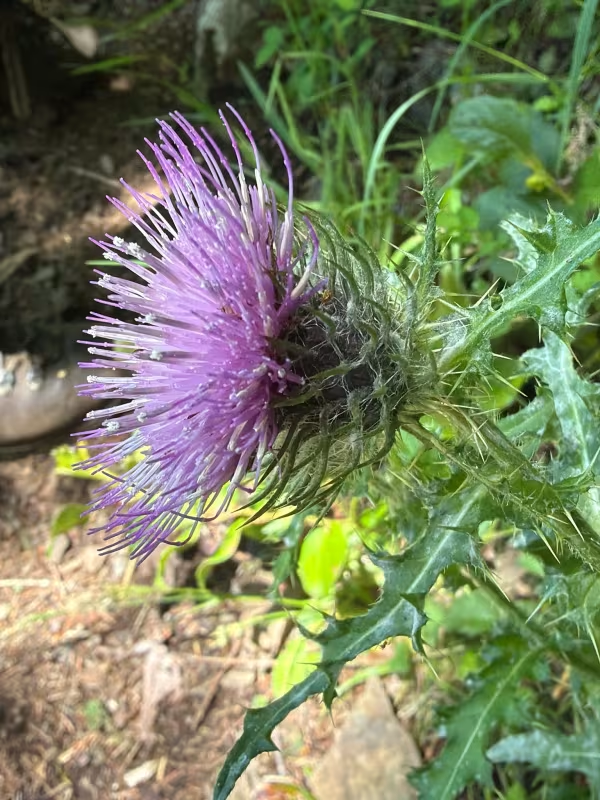
Description
Sowing dates
Edible thistle (Cirsium edule), a member of the Asteraceae family, is a perennial herb. While its seeds demonstrate good germination, cultivation generally involves sowing in late autumn or early spring following a necessary period of cold stratification.
For successful seed germination, the soil must maintain consistent moisture levels and avoid extreme temperature fluctuations. It is recommended to sow seeds in light, well-prepared seedbeds at a depth not exceeding 1.5 to 2 centimeters.
Spring sowings require careful protection for young seedlings against desiccating winds and intense direct sunlight. The plant invests heavily in root development during its first year, necessitating adequate spacing between rows to allow for the expansion of the large basal rosette.
Planting density depends on the specific harvest goal; if the intention is to collect flower stalks, spacing should be at least 60-80 centimeters apart. Excessive density can stunt development and lower the overall quality of the harvestable plant parts.
Propagation via root division is also viable, often producing stronger specimens more rapidly than seed. This method is favored by small-scale growers aiming to multiply their most productive genetic stocks efficiently.
Growing requirements
Native to western North America, Edible thistle thrives in moist forests and along riparian corridors. The crop prefers partial shade or areas with filtered light, as direct mid-summer sun can scorch the tender growth of young shoots.
The plant has high water requirements but cannot tolerate waterlogged soil conditions. Loamy or sandy substrates rich in organic matter, with a neutral to slightly acidic pH, provide the ideal medium for growth.
Agronomic management includes regular mulching around the root zone to retain moisture and suppress weed competition. Thistle responds favorably to the application of well-rotted compost, which promotes the vegetative mass necessary for a high-yield harvest.
Under cultivation, monitoring nitrogen levels is essential; excessive nitrogen can lead to soft, succulent tissue prone to rot. Adequate potassium availability is vital for developing sturdy stems that resist lodging.
The species exhibits strong cold hardiness, characteristic of plants adapted to mountainous and coastal regions of North America. During the winter, the robust rhizome is protected by the soil, allowing the plant to easily withstand temperatures typical of temperate zones.
Yield
Yield for Edible thistle is assessed by the harvest volume of succulent young shoots and immature flower heads. Peak productivity usually occurs in the second or third year, once the plant has established a massive, mature root system.
With proper care, a single square meter can produce between 1.5 and 3 kilograms of edible plant material. The most valued components are the young, tender stems, which must be harvested before they become woody or flowering commences.
Although less commonly harvested, the roots of Edible thistle are also edible and can contribute significantly to overall yield. Harvesting roots requires thorough soil preparation due to their deep penetration into the substrate.
Regular harvesting of flower stalks during the early development phase encourages the plant to produce secondary side shoots. This practice extends the harvesting window throughout the summer season and improves total area productivity.
Consistency in yield depends on avoiding stress factors such as prolonged drought or severe pest infestation. When provided with optimal environmental parameters, Edible thistle can remain a productive crop on the same site for five to seven years.
Main diseases and pests
The primary pests affecting Edible thistle include sucking insects such as aphids and spider mites, which congregate on the underside of the large leaves. Control measures should prioritize biological agents or mild soap solutions to manage pest populations.
Fungal diseases, including powdery mildew and various rusts, may occur in dense plantings with poor ventilation. Prevention is achieved through careful irrigation management and the prompt removal of infected foliage.
Slugs and snails represent a major threat to young thistle rosettes during wet weather, as they feed voraciously on tender plant tissues. Creating physical barriers, such as wood ash or gravel rings around the plant base, helps minimize damage.
Root rots can occur if soil moisture remains excessive for long periods, particularly in heavy clay soils. Improving site drainage is the primary method for mitigating pathogens that attack the root system during dormant phases.
- Aphids and mites
- Powdery mildew
- Slugs and snails
- Root rot pathogens
Harvesting
Harvesting of young stems should take place early in the morning, when tissue turgor is at its peak. Stems are cut with a sharp knife at the soil line, taking care to avoid damaging the central crown from which new shoots will emerge.
Flower heads intended for culinary use are collected before the scales of the involucre begin to open. At this precise stage, the heads possess the best texture and contain the lowest concentration of tough, fibrous material.
Harvested produce should be cooled rapidly or processed immediately, as tender shoots lose moisture quickly at room temperature. Storing the crop in a cool location with relative humidity exceeding 85% is ideal for maintaining freshness.
The best time for harvesting roots is late autumn, as the above-ground portions of the plant begin to senesce. During this phase, carbohydrates are translocated to the roots, maximizing their nutritional value and flavor profile.
When lifting rhizomes, garden forks are essential to minimize mechanical damage to the root structure. After removal from the soil, the roots must be thoroughly cleaned of debris and can be used fresh or dried for long-term storage.