
Field thistle
Cirsium discolor
Description
Growing requirements
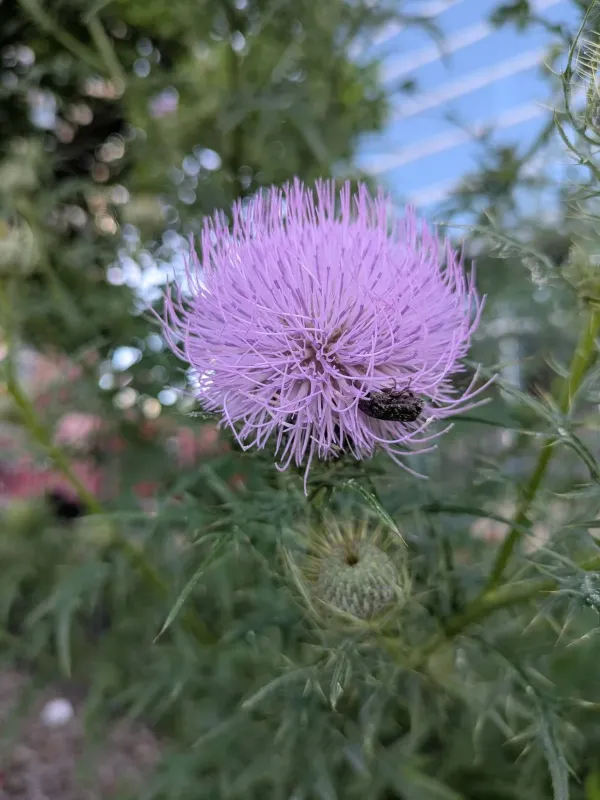
Field thistle (Cirsium discolor) is a member of the Asteraceae family. It is a biennial forb native to North America, typically found in moist prairies, meadow borders, and open woodlands where it serves as a critical component of the local ecosystem.
The plant thrives in deep, fertile soils with moderate moisture retention. While it exhibits a high degree of adaptability, it performs best in soils that are well-drained and neutral to slightly acidic, avoiding sites prone to long-term waterlogging.
Climate-wise, Cirsium discolor requires full sun exposure to reach its full development potential. It is well-adapted to the fluctuating moisture levels characteristic of temperate climates, utilizing a deep taproot to survive drier summer periods.
Agronomic management of this species focuses on managing its rapid biennial growth cycle. It is often encouraged in pollinator conservation zones because its late-season blooming provides an essential nectar source for bees and butterflies.
The plant's structural biology includes a rosette stage in the first year, followed by a tall, branched flowering stalk in the second year, which is a characteristic growth pattern for many thistle species in this genus.
Main diseases and pests
Insects such as the thistle head weevil can significantly impact seed production, as they target the developing flower heads, potentially reducing the overall reproductive output of the population.
Fungal diseases, particularly various forms of leaf rust, pose a persistent threat in environments with high humidity levels and limited air movement between individual plants.
Powdery mildew often appears during late summer, manifesting as a dusty white coating on leaves that can diminish the plant's overall vigor and photosynthetic capability during the critical flowering stage.
Aphid infestations are a common issue, as these insects can drain plant nutrients and transmit viral diseases, which manifest as leaf curling and stunted growth patterns.
Proper field management, including thinning of dense stands and ensuring adequate spacing, is essential to minimize the risk of pathogen transmission and to maintain a healthy growth environment.