
Cretan thistle
Cirsium creticum
Description
Growing requirements
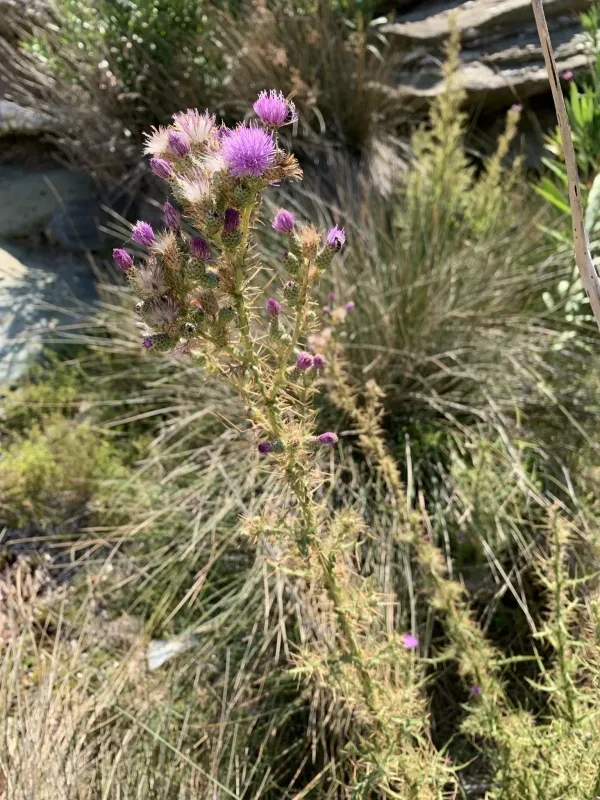
Cretan thistle (Cirsium creticum) is a robust perennial herb belonging to the family Asteraceae. It is native to the Mediterranean basin, where it typically colonizes open and semi-open habitats.
The botanical structure of the plant features a deep root system, which allows it to thrive in various soil types, provided there is adequate moisture throughout the growing season.
It prefers sunny environments and is commonly found in damp grasslands, riparian corridors, and near irrigation ditches, reflecting its high water requirement.
Soil fertility plays a crucial role in the development of Cirsium creticum, with a preference for slightly clayey or loamy soils that possess a good capacity for nutrient retention.
Climatically, it is well-adapted to mild Mediterranean winters and warm summers, although it is sensitive to severe drought which limits its metabolic activities.
Main diseases and pests
Various insect pests, particularly flower-head weevils, pose a significant threat to the reproductive success of the plant by consuming developing seeds.
Fungal pathogens such as rust fungi (Puccinia species) are frequent, causing visible lesions on leaves and potentially reducing the plant's overall vigor during damp weather.
Root-knot nematodes can impact the subterranean parts, causing nutrient uptake deficiency and making the plant more susceptible to environmental stressors.
Dense populations of these plants can facilitate the spread of systemic diseases within a patch, leading to widespread decay if the moisture levels remain excessively high.
Integrated management strategies focusing on mechanical removal and cultural practices are recommended to prevent the expansion of this species in managed landscapes.