
Costa Rican Thistle
Cirsium costaricense
Description
Growing requirements
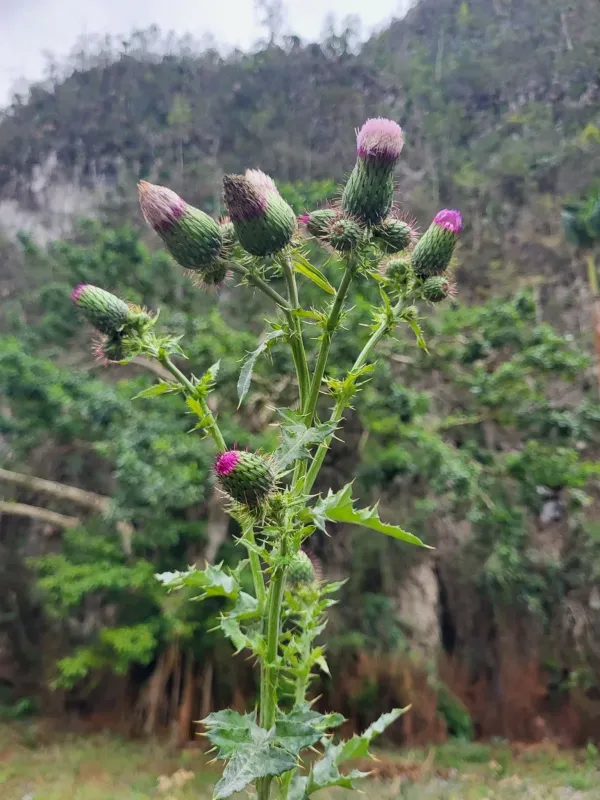
The Costa Rican Thistle (Cirsium costaricense) belongs to the Asteraceae family. It is a perennial herbaceous plant specialized for the unique environmental conditions of tropical high-altitude regions.
This species is native to the high-mountain areas of Costa Rica and Panama. It is typically found in the paramo ecosystems, which are alpine meadows located at elevations between 2,500 and 3,500 meters.
The plant thrives in open, sunny environments characterized by high air humidity. Its root system is specifically adapted to volcanic soils that are rich in organic matter but often highly acidic.
The thistle has evolved to withstand significant daily temperature fluctuations common in the tropical highlands. Its structure is highly resistant to strong winds and intense solar radiation at high altitudes.
Ecologically, this plant plays a vital role in soil stabilization. It helps prevent erosion on steep mountain slopes by maintaining a firm grip on the rocky substrate with its robust root architecture.
Main diseases and pests
The primary threats to this species include various fungal diseases that manifest during prolonged rainy seasons. Foliar rusts and blights can severely impact the plant's growth vigor.
Insect pests, particularly those that bore into the stems, represent a major risk. These infestations can lead to physical weakening and make the plant susceptible to secondary pathogens.
Overgrazing by livestock in high-mountain pastures is a significant threat to its survival. Mechanical damage from trampling destroys the delicate crown and root systems of the plants.
Climate change poses a long-term risk by shifting the temperature zones. This forces the thistle to compete with migrating species from lower altitudes, disrupting its traditional habitat.
Effective management requires sustainable land use practices. Protecting the natural habitat is essential to ensuring that these populations continue to provide their critical ecosystem services.