
Fringed Thistle
Cirsium ciliatum
Description
Sowing dates
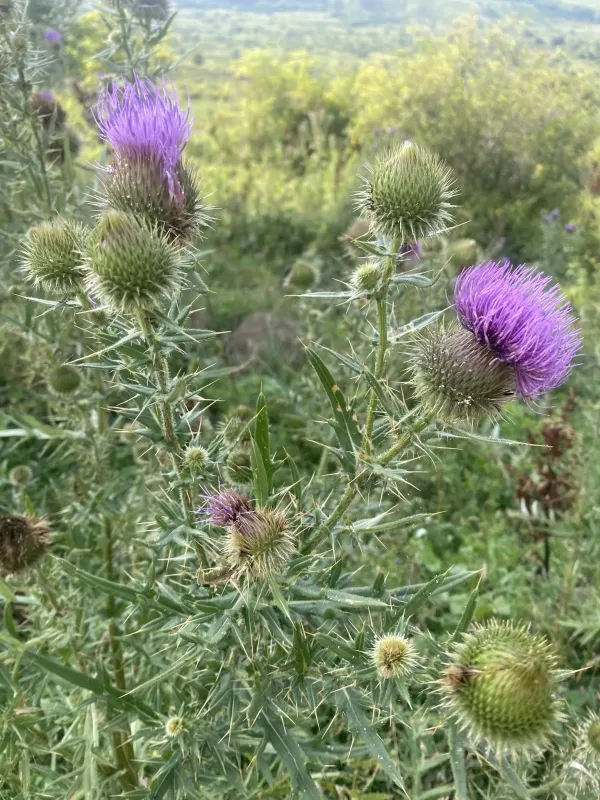
Fringed Thistle (Cirsium ciliatum) is a perennial herbaceous plant belonging to the Asteraceae family. It is recognized for its robust growth habit and ability to thrive in disturbed agricultural environments and pastures.
The plant reproduces primarily through seeds, which are equipped with pappus for wind dispersal. Germination typically occurs in the spring, although seeds can remain viable in the soil seed bank for several seasons.
Biologically, the plant develops a deep taproot, which allows it to withstand various environmental stressors. The foliage is typically spiny, a trait that discourages grazing by livestock and provides protection.
Originating from regions within Europe and Asia, it has successfully adapted to a wide range of habitats. In agricultural contexts, it is often classified as a persistent weed that competes aggressively for resources.
The establishment of this plant in crops leads to significant yield losses due to nutrient depletion and space occupation. Its persistent root system makes manual removal difficult, necessitating integrated control strategies.
Growing requirements
This species favors fertile, well-drained soils with a neutral pH. It is highly adaptable and can be found growing in loamy, clay-rich, and even slightly rocky soil types throughout its range.
High levels of solar radiation are preferred, as Fringed Thistle is intolerant of shade. Competition from dense crop canopies can significantly reduce the vitality of individual plants.
Climatic requirements involve temperate conditions with moderate rainfall. The plant is drought-tolerant once established, thanks to its extensive vertical root network that reaches deeper soil layers.
Effective agrotechnical management involves regular soil cultivation to disturb root systems. Crop rotation is essential, specifically including crops that require heavy soil preparation and post-harvest tilling.
Limiting the dispersal of seeds is a critical part of its management. Mowing or shredding before flowering is highly recommended to prevent seed set and minimize the impact on the following year's seed bank.
Main diseases and pests
The species is susceptible to various fungal pathogens, including rusts and powdery mildew, which can impair its growth. These natural enemies often play a role in limiting populations in non-cultivated areas.
Several insect species, including specific weevils and leaf beetles, feed on the plant's tissues. These natural predators can reduce the plant's overall reproductive success and vigor.
For agricultural control, systemic herbicides are widely used. Application is most successful during the early rosette stage, allowing the active ingredients to be transported to the root system.
Mechanical control is effective in small areas but requires persistent effort to exhaust the energy stored in the roots. Removing the main root below the soil surface is necessary for permanent elimination.
Integrated weed management remains the best practice for Fringed Thistle. Combining cultural, mechanical, and chemical approaches ensures the most sustainable control in diverse farming systems.