
Cirsium canum
Cirsium canum
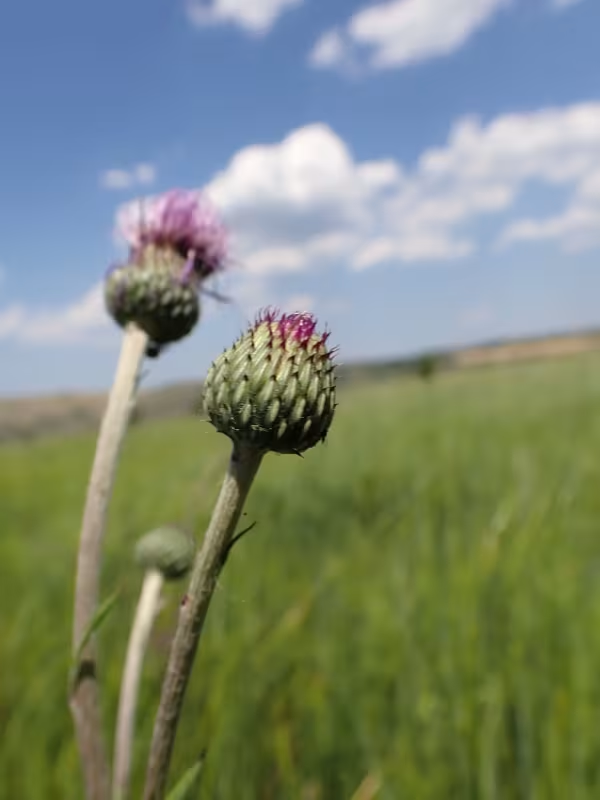
Description
Sowing dates
Cirsium canum, known as the hairy thistle, typically spreads through wind-dispersed seeds in early spring or late autumn depending on local climate.
Seeds of this species feature a pappus which facilitates long-distance travel, allowing the weed to colonize new areas quickly after clearing.
Germination usually commences when soil temperatures stabilize between 6 and 10 degrees Celsius, often outcompeting slow-emerging crop varieties.
Vegetative propagation via underground rhizomes is a key survival strategy, making it difficult to eliminate the plant through superficial cultivation.
Agronomists emphasize early scouting to detect clusters of rosettes, which allows for spot-treatment before the plant establishes a deep root system.
Growing requirements
This species thrives in moist, nitrogen-rich soils, making it a common inhabitant of wetlands, lowland pastures, and riverbanks.
It possesses high adaptability to varying moisture levels but shows limited tolerance for extremely arid or highly saline soil environments.
Full solar exposure is essential for the robust development of the plant, as canopy shading in dense crops significantly limits its growth potential.
The plant belongs to the Asteraceae family and is characterized by a strong taproot that enables access to nutrients and water in deeper soil layers.
Successful management strategies in agricultural land involve deep plowing to disrupt root integrity and consistent monitoring of soil nutrient levels.
Yield
In agricultural systems, Cirsium canum is primarily classified as a persistent weed that competes for space, nutrients, and sunlight with field crops.
However, it serves as a valuable nectar source for pollinators, playing a positive role in biodiversity and supporting healthy insect populations.
Green biomass harvested before the flowering stage can contribute to compost, though its utility as a primary forage crop is negligible due to texture.
The economic impact of the plant is largely negative, as it reduces the overall productivity of cultivated land through aggressive competition.
Sustainable land management often focuses on mitigating its presence to ensure that crop yields are maximized without unnecessary competition from weeds.
Main diseases and pests
Cirsium canum acts as a natural reservoir for several plant pathogens and viruses that can be transmitted to important agricultural commodity crops.
Insects like stem borers and aphids frequently utilize this thistle as a host, increasing the pressure of these pests on surrounding field plantings.
The primary threat remains its ability to rapidly invade crop fields, causing significant economic losses if not managed during the early stages.
Chemical control involving selective herbicides is often the most effective method for large-scale infestations in arable farming environments.
Integrated weed management, combining mechanical tillage and biological control, is recommended to reduce the chemical footprint on the soil.
Harvesting
Harvesting strategies for land containing Cirsium canum should prioritize the prevention of seed maturation to break the propagation cycle.
Mowing should be carried out strictly before the flower heads develop, ensuring the stems are cut close to the ground to weaken the roots.
Removal of plant material from the field is advisable to prevent accidental redistribution of seeds or segments of the root system.
Effective shredding during the harvesting process can assist in faster decomposition of the plant matter when integrated into soil fertility plans.
Regular maintenance of field margins and buffer zones significantly reduces the risk of thistle encroachment into productive crop areas.