
Common centaury
Centaurium centaurioides
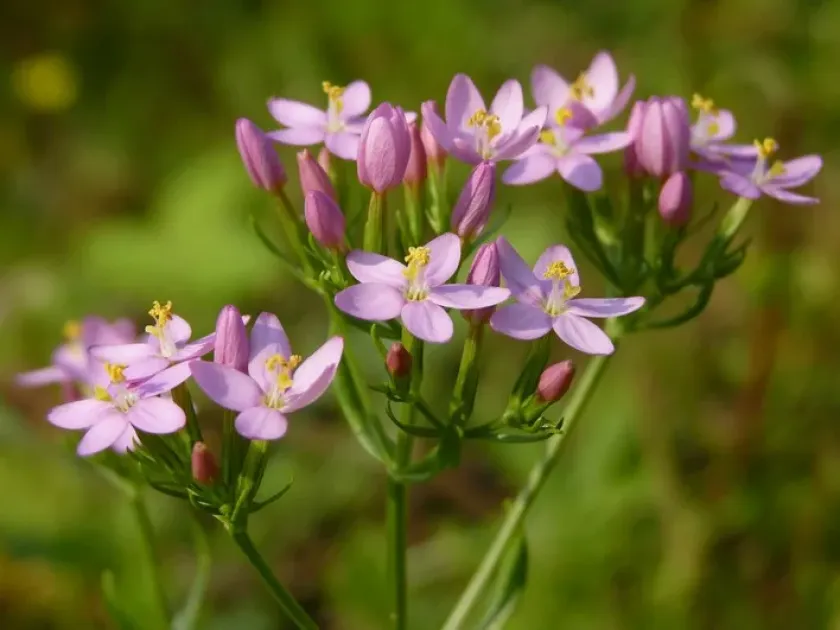
Description
Sowing dates
Common centaury is a biennial herbaceous plant belonging to the Gentianaceae family. For agricultural production, the seeds are typically sown in late autumn to utilize natural winter stratification.
Because the seeds are extremely small, they are sown on the soil surface or covered with a very thin layer of soil, not exceeding 0.5 cm, to ensure they receive sufficient light for germination.
The standard planting pattern uses row spacing of approximately 30 to 40 cm, allowing for efficient weeding and cultivation throughout the first year of growth.
Seedbed preparation is crucial; the soil surface must be finely leveled to prevent the seeds from being buried too deep by irrigation or rainfall events.
Seedling emergence is slow and gradual, necessitating excellent weed control during the early stages of establishment to prevent competition for resources.
Growing requirements
The crop thrives in sunny, open locations as shading significantly reduces the accumulation of bioactive compounds and overall plant vigor during the flowering stage.
Soil requirements include well-drained, fertile loam with a neutral to slightly alkaline pH, which facilitates healthy root development and efficient nutrient uptake.
The plant is highly sensitive to waterlogged conditions, which promote root rot and can cause substantial crop loss, especially during the early developmental phases.
Common centaury demonstrates good frost tolerance; however, it requires protection from severe cold in areas lacking stable snow cover during the winter months.
Agronomic management involves periodic inter-row cultivation to maintain soil aeration and suppress the growth of weeds that could threaten the slow-growing crop.
Yield
The yield of dry herbal mass typically ranges from 150 to 300 kilograms per hectare, depending on soil fertility, climate conditions, and the precision of the harvest timing.
Maximum productivity is reached in the second year, as the plant develops its primary flowering stem, which is the main target for pharmaceutical processing.
The application of balanced fertilizers, particularly those rich in phosphorus and potassium, can significantly enhance the secondary metabolite content in the plants.
Effective production depends on strictly adhering to the harvest window, as the medicinal potency drops significantly after the peak of the flowering stage.
Efficient post-harvest handling, including rapid drying and proper storage, is essential to maximize the commercial value of the harvested medicinal raw material.
Main diseases and pests
Fungal diseases are the most significant threat to common centaury crops, particularly when high humidity and poor drainage conditions coincide.
Root rot represents the primary cause of plant death, making crop rotation and the selection of well-drained field sites critical components of successful management.
Pests such as aphids and various leaf-chewing insects may cause damage to the foliage, which reduces the plant's ability to produce necessary energy for growth.
Integrated pest management strategies focusing on preventative measures and biological control agents are preferred to minimize the impact of chemical residues on the crop.
Maintaining proper distance from wild-growing botanical relatives is recommended to mitigate the risk of pathogen transmission from natural plant populations.
Harvesting
Harvesting is performed during the peak flowering stage when the active principles are most concentrated, ensuring high-quality raw material for the industry.
The entire aerial part of the plant is cut at a height of 5–10 cm above the soil surface to ensure that the plant remains healthy and avoids soil contamination.
Harvested material must be protected from sunlight and heat immediately after cutting to prevent discoloration and the degradation of essential chemical components.
Drying is conducted in shade or temperature-controlled drying ovens at temperatures not exceeding 45 degrees Celsius to preserve the plant's medicinal properties.
Once dried, the product is cleaned of impurities and packaged in moisture-resistant materials to ensure compliance with pharmaceutical quality standards.