
Ascherson's centaury
Centaurium aschersonianum
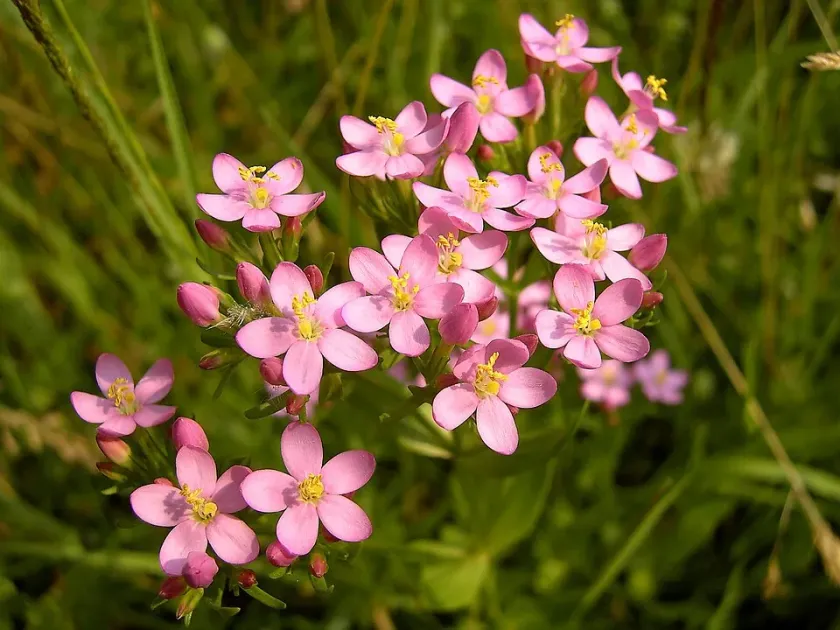
Description
Sowing dates
Sowing of Ascherson's centaury is best carried out in the spring when soil temperatures reach 10–12 degrees Celsius. The seeds are extremely small, requiring surface sowing with minimal to no coverage to ensure they receive enough light for germination.
High moisture levels are critical during the early stages of development. In commercial settings, using seedling trays under controlled greenhouse conditions is preferred to ensure uniform stand density before transplanting.
When moving to the field, seedlings should be spaced 20–25 centimeters apart. This spacing is vital for preventing overcrowding, which can otherwise impede growth and increase the risk of humidity-related issues.
The seedbed must be meticulously weed-free. Because Ascherson's centaury establishes itself slowly, early competition from faster-growing weeds can easily lead to crop failure if not managed early on.
Cold stratification of seeds for a few weeks prior to planting can significantly improve germination rates. This simulates natural environmental conditions and helps to overcome seed dormancy, leading to a more robust crop.
Growing requirements
Ascherson's centaury, a member of the Gentianaceae family, thrives in moderately moist and well-drained soils. Waterlogged conditions are detrimental and must be avoided to maintain root health and prevent disease.
The plant prefers sandy loam or light loam soils with a neutral to slightly acidic pH. High organic content in the soil profile supports better nutrient uptake and helps retain moisture during dryer spells.
Full sun is ideal, although providing partial shade during peak afternoon heat in hotter regions can prevent the plants from drying out. Consistent light is essential for the synthesis of secondary metabolites.
Management involves regular weeding and light surface cultivation to break soil crusting. Irrigation should be applied consistently but sparingly, focusing on the root zone rather than wetting the foliage.
Wind protection is recommended, as the delicate stems of the plant are susceptible to mechanical damage. Creating windbreaks or planting in sheltered areas improves the overall vigor of the crop.
Main diseases and pests
Fungal infections, particularly root rot and powdery mildew, represent the primary threat to the crop. These are almost always linked to excessive soil moisture or poor airflow within the planting site.
Crop rotation is essential for disease management. Avoiding the cultivation of Ascherson's centaury in the same field for multiple consecutive years helps reduce the build-up of soil-borne pathogens.
Insects like aphids and spider mites can occasionally colonize the plants. These pests should be managed using integrated pest management strategies that emphasize biological controls over harsh chemical interventions.
Slugs can be problematic, especially in cool, damp conditions. Using physical barriers or non-toxic traps is an effective way to keep these pests away from young, tender shoots during the early spring season.
- Monitor for early symptoms of wilting to identify root problems.
- Use certified clean seed to prevent the introduction of pathogens.
- Ensure adequate spacing between plants to promote rapid drying.
- Remove any infected plant debris promptly to avoid spreading spores.
- Avoid over-fertilization, as high nitrogen levels can weaken tissue.
Harvesting
Harvesting should occur at the peak of the flowering stage, which is when the concentration of medicinal alkaloids and bitter glycosides is highest in the aerial parts of the plant.
The stems should be cut carefully with sharp shears several centimeters above the ground to encourage potential regrowth. Harvesting should ideally be done in the morning after dew has evaporated.
Drying must occur immediately in a shaded, well-ventilated area to preserve the chemical integrity of the plant. High temperatures must be avoided to prevent the degradation of heat-sensitive active compounds.
The process is finished when the stems become brittle and break easily. Properly dried raw material should retain its distinct bitter taste and characteristic herbal scent, which are marks of high quality.
Once dried, the product should be stored in paper bags in a cool, dark, and dry environment. Storage life is typically around two years, after which the medicinal potency begins to decline significantly.