
Carmichaelia williamsii
Carmichaelia williamsii
Description
Growing requirements
Carmichaelia williamsii is a remarkable shrub belonging to the Fabaceae family, endemic to the coastal regions of New Zealand. It is highly valued in horticulture for its distinct structural morphology, characterized by flattened, leafless green stems that facilitate photosynthesis.
The cultivation of this species requires a specific environment that mimics its natural habitat, which is often rocky or sandy coastal terrain. High porosity of the soil is mandatory to ensure root health and prevent the development of anaerobic conditions that are lethal to this plant.
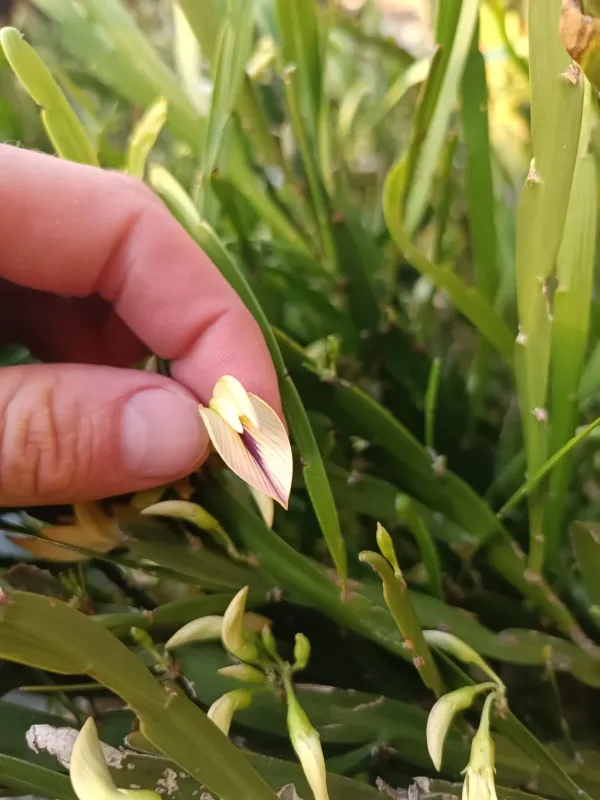
Light intensity plays a critical role in the growth cycle of Carmichaelia. It thrives in full sun exposure, which is necessary not only for the vegetative development but also to stimulate the production of its characteristic yellow, purple-streaked flowers during the blooming season.
Regarding climate, this plant is well-adapted to maritime influences but is sensitive to prolonged frost. In regions with harsher winters, cultivation should be restricted to controlled environments like greenhouses or sheltered botanical displays where temperature fluctuations are minimal.
Horticulturally, it is utilized as an ornamental specimen in gardens and collections. Its maintenance involves minimal pruning, focusing primarily on the removal of damaged stems after the flowering period to encourage density and health of the shrub.
Main diseases and pests
The most significant threat to Carmichaelia williamsii is root rot caused by Phytophthora species. This disease is directly correlated with poor drainage and excessive irrigation, making soil management the primary component of successful plant protection.
In terms of pests, sap-sucking insects like aphids are the most common issue. These pests tend to colonize the succulent stems, especially in young plants. Integrated pest management, involving manual removal or targeted biological control, is recommended for sustainable plant health.