
Carmichaelia monroi
Carmichaelia monroi
Description
Growing requirements
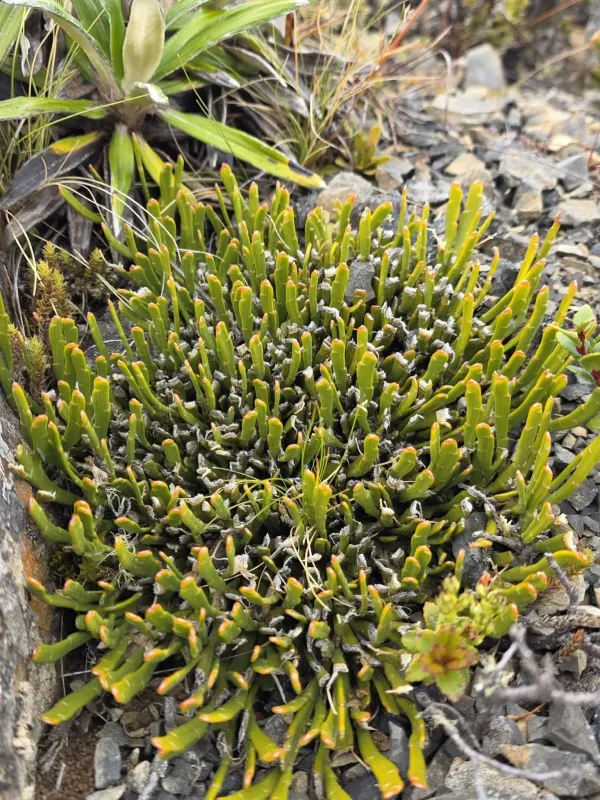
Carmichaelia monroi is a distinct dwarf shrub belonging to the legume family (Fabaceae), native to the rocky landscapes of New Zealand's South Island. It is highly valued for its architectural form and adaptation to harsh, windy environments.
The plant features flattened, leafless branches that conduct photosynthesis, a structural strategy that enables it to minimize transpiration. This makes it an ideal candidate for rock gardens and xeriscaping.
Successful cultivation requires extremely well-draining soil, ideally of a gritty or sandy composition. It thrives in full sun, which helps prevent the development of moisture-related pathologies that occur in shade.
It is moderately cold-hardy, but it requires protection from prolonged waterlogging during the dormant season. The species performs best in climates where seasonal shifts are not accompanied by excessive humidity.
Maintenance is minimal, as the shrub is slow-growing and does not require frequent pruning. It is recommended to leave the plant largely undisturbed once established, as it dislikes being moved or having its roots tampered with.
Main diseases and pests
The most significant threat to Carmichaelia monroi is root rot caused by stagnant water in the soil profile. Because the plant is native to well-drained mountain slopes, it lacks resistance to pathogens that thrive in wet, heavy clays.
Pests such as aphids or spider mites can occasionally affect the plant, particularly if the bush is weakened by poor air circulation. These pests can be managed through simple horticultural soaps if detected early.
Preventive measures include ensuring that the planting site is elevated or situated on a slope to improve drainage. Avoid heavy organic mulches that keep the crown of the plant consistently damp.
The lack of foliage means that any damage to the outer stems is clearly visible and can compromise the plant's structural integrity. Monitoring the branches for discoloration is an essential part of routine care.
If fungal infections are suspected, one should immediately improve soil aeration and apply copper-based fungicides. Always ensure that neighboring plants do not encroach upon the shrub's space, as airflow is critical for its health.