
Carmichaelia crassicaulis
Carmichaelia crassicaulis
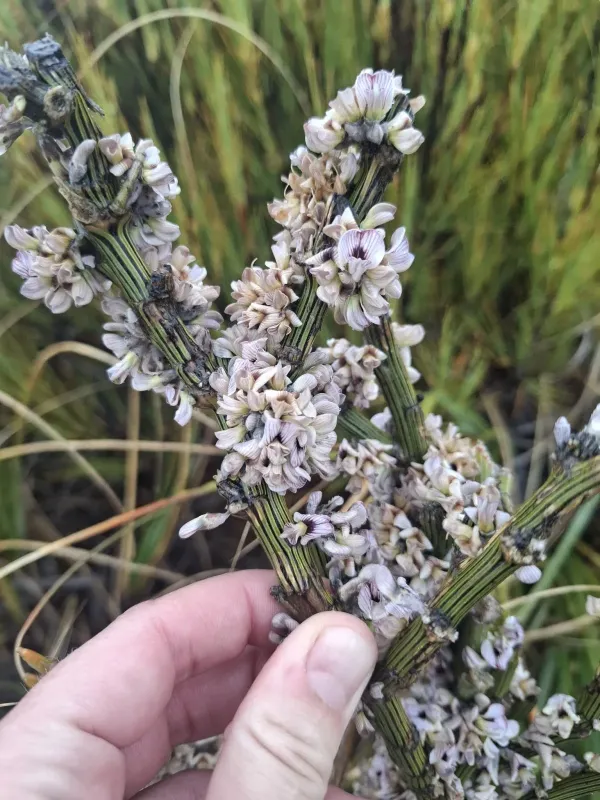
Description
Growing requirements
Carmichaelia crassicaulis is a distinctive shrub species belonging to the legume family (Fabaceae). Native to the South Island of New Zealand, this plant has adapted to harsh alpine conditions, including rocky environments and high winds.
The plant is anatomically fascinating due to its leafless nature. Photosynthesis is conducted through flattened, fleshy, green stems, a biological adaptation known as cladodes, which helps the plant conserve water in arid habitats.
In terms of cultivation, it requires exceptionally well-draining soil. A gritty, nutrient-poor substrate that mimics its natural stony habitat is essential to prevent root rot, which is the most common cause of mortality for this species.
The climate requirements for Carmichaelia crassicaulis involve a need for bright, direct sunlight and good airflow. It thrives in environments with cool, dry winters and temperate summers, reflecting its origins in the mountainous regions of its native range.
Economically, it is cultivated as an ornamental specialty plant for collectors and specialized landscape designs. Its xerophytic nature makes it an interesting candidate for low-maintenance, water-wise landscaping projects.
Main diseases and pests
The most critical threat to the health of this species is root and crown rot, primarily induced by over-irrigation or soil compaction. Maintaining a strictly regulated moisture regime is vital for successful cultivation.
Fungal issues such as powdery mildew may develop if the plant is kept in stagnant, humid air. Ensuring good ventilation and keeping the stems dry during cooler periods helps to mitigate this risk significantly.
Pests such as spider mites may infest the stems, especially in indoor environments where the air is dry and warm. Monitoring and occasional gentle cleaning of the stems can help manage pest populations.
Scale insects can occasionally appear on the succulent stems, feeding on the plant sap. Early detection and mechanical removal are preferred over harsh chemical treatments, which the plant might find sensitive.
Inadequate light exposure often leads to weak, spindly growth. This physical stress leaves the plant more vulnerable to opportunistic pathogens that thrive on weakened organic matter.